People keep asking which month is the best one to visit the Galapagos, and the honest answer is that there isn’t one. The archipelago never shuts down. What changes is who is putting on the show. Turtles dig nests in January, albatrosses land in April, penguins go hunting in September, and the water swings from bathtub-warm to bracing depending on which current is winning that season.
So instead of ranking the months, here is what actually happens in each one, and which trip puts you in the right spot to see it.
January in the Galapagos: Green Sea Turtles Nest and Marine Iguanas Change Color
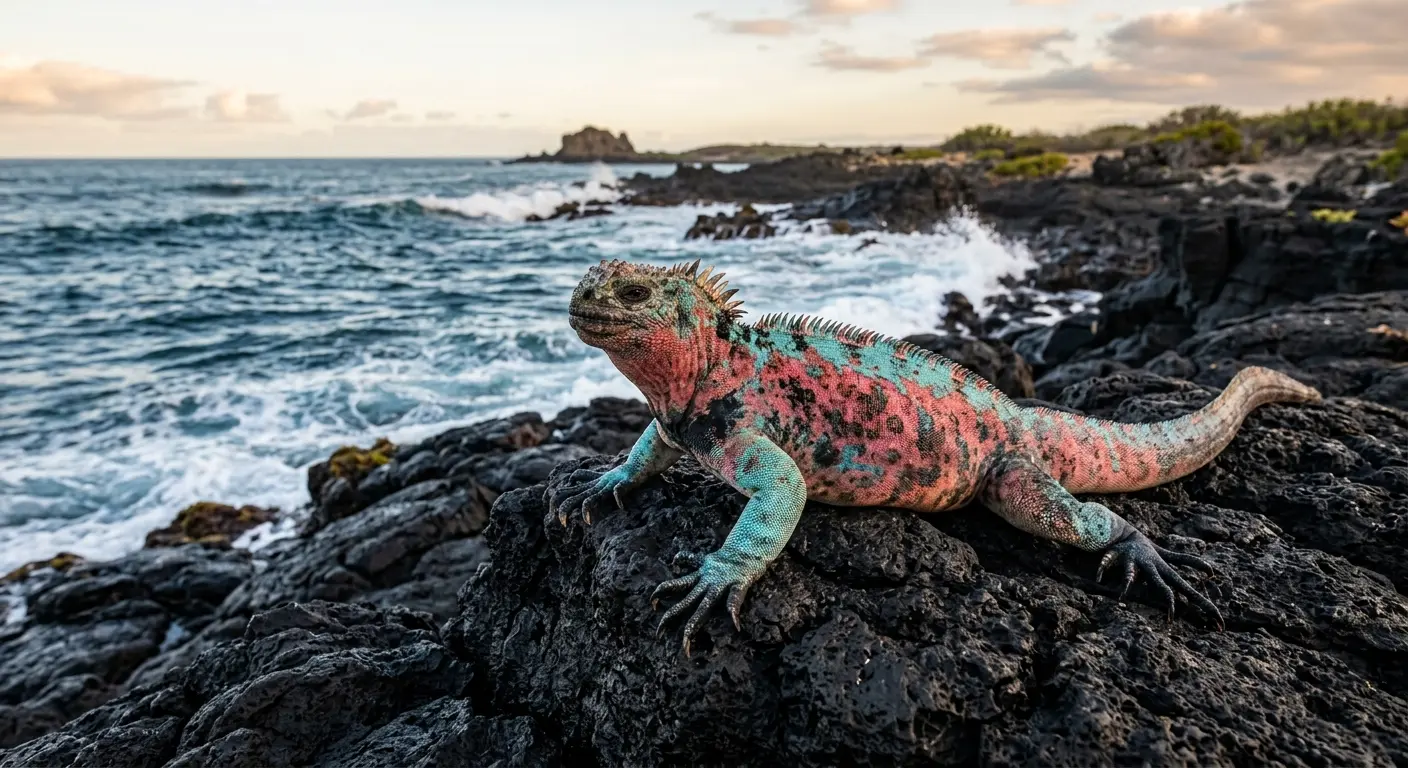
The warm season opens with short afternoon downpours that leave the islands green within days. At night, female green sea turtles haul themselves onto quiet beaches to dig their nests, and by day you’ll find them cruising the shallows offshore. On Española, male marine iguanas begin turning red and turquoise for the breeding season, which is why locals call them Christmas iguanas.
Calm bays are your best bet for turtle sightings this month. A slow paddle through the Tintoreras islet by kayak on Isabela often puts turtles right under the hull.
February in the Galapagos: Greater Flamingos Nest on Isabela
February is the hottest month of the year and the water hits its friendliest temperature. In the brackish lagoons behind Puerto Villamil, greater flamingos build their mud-cone nests, and the population here is small enough that a single nesting pair feels like a private sighting. Land birds are also in full breeding mode, so expect noisy finches everywhere.
Pair a morning at the lagoons with the hike up Sierra Negra volcano, which sits above the same wetlands and gives you the whole southern coast of Isabela in one view.
March in the Galapagos: Peak Marine Iguana Nesting and the Warmest Water of the Year
March is the wettest month and the one snorkelers quietly love. Water temperatures peak, wetsuits become optional, and visibility is generally excellent. On the coastal lava, marine iguana females dig nests in the sand and defend them with surprising aggression for an animal that spends most of its life doing nothing.
This is the month to make the most of the water. The reefs around Pinzón Island are calm, shallow and packed with reef fish, white-tipped sharks and rays.
April in the Galapagos: Waved Albatrosses Return to Española Island
Everything on Española revolves around this. Starting in April, the entire world population of waved albatrosses comes back to the island to breed. Nowhere else. They land clumsily, find last year’s partner and start the long, clacking courtship that ends with a single egg. Watching a bird with a two-and-a-half-metre wingspan try to walk is worth the trip on its own.
You only get one shot at this, and it is a seasonal window. Book the Española Island day tour between April and December if albatrosses are on your list.
May in the Galapagos: Blue-Footed Boobies Start Their Courtship Dance
May is when the boobies get ridiculous. Males lift one blue foot, then the other, whistle, point their beaks at the sky and offer twigs to a female who mostly looks unimpressed. The bluer the feet, the better the diet, and the females know it. The weather also settles here as the seasons transition, with fewer showers and calmer crossings.
The best seats are on North Seymour Island, where boobies and frigatebirds nest along the trail, sometimes within a metre of your boots.
June in the Galapagos: Giant Tortoises Migrate Down from the Highlands
As the cool, misty garúa season arrives, giant tortoises begin moving from the highlands toward the lowlands of Santa Cruz to nest. Seeing a hundred-kilo tortoise plodding along an old migration route it has used its whole life is a strangely moving thing.
The highland ranches and lava tunnels covered in the 180° Santa Cruz Island tour are where these encounters happen, and June is when the traffic is heaviest.
July in the Galapagos: Whale and Dolphin Season in the Bolívar Channel
The Humboldt current is now pushing cold, plankton-rich water between Isabela and Fernandina, and the whole food chain follows. Bryde’s whales, orcas, sperm whales and huge pods of common dolphins gather in the Bolívar Channel. Seabird colonies are at their busiest and flightless cormorants begin their courtship.
The channel is only reachable on western itineraries, so this is cruise territory. Boats like the Tiburón Explorer liveaboard spend real time in these waters instead of passing through.
August in the Galapagos: Red-Footed Boobies Nest on Genovesa Island
Genovesa is a sunken caldera in the far north with a seabird density that is genuinely hard to describe. In August, red-footed boobies nest in the mangroves and low trees, sharing the island with Nazca boobies, short-eared owls and thousands of storm petrels. Sea lions are also giving birth on several islands now, and fur seals begin their mating season.
Genovesa is not a day-trip destination. It shows up on northern itineraries aboard vessels such as the Monique catamaran.
September in the Galapagos: Peak Penguin Activity and Cold, Nutrient-Rich Water
September is the coldest, roughest month, and it is also the most productive. Cold upwellings feed everything, which means Galapagos penguins are hunting constantly and are far more active than at any other time of year. Bring a wetsuit and accept some chop on the crossings. The wildlife payoff is worth it.
Penguins hang around the base of Pinnacle Rock, which makes Bartolomé Island the classic September snorkel.
October in the Galapagos: Sea Lion Pup Births Reach Their Peak
Sea lion colonies are loud, smelly and completely captivating in October. Pupping peaks this month, so the beaches fill with newborns, nursing mothers and bull males patrolling the waterline. Blue-footed boobies are also feeding chicks, and giant tortoises are still returning uphill.
For colonies at close range without the crowds, the beaches of Lobos Island off San Cristóbal are hard to beat.
November in the Galapagos: Great Visibility and Curious Sea Lion Pups in the Water
The seas begin to settle, water clarity is excellent and last month’s pups are now confident enough to swim. Young sea lions will follow snorkelers, spin around them and blow bubbles in their masks, which is as close to playing with a wild animal as you’re likely to get. Fur seals and brown noddies are also nesting.
Two good options this month: the deep-water walls of Kicker Rock for sharks and rays, or the sheltered bay at Santa Fe Island, which has its own endemic land iguana and a resident sea lion colony.
December in the Galapagos: The First Giant Tortoise Eggs Hatch
The warm season returns, the rain brings the vegetation back and the first giant tortoise hatchlings break out of their nests, each one no bigger than your palm. Green sea turtles start their mating displays offshore, and waved albatross chicks on Española are fledging before the adults leave for the year.
Floreana has both tortoise history and one of the archipelago’s stranger human stories. The Floreana Island land tour covers the highlands, Post Office Bay and the old pirate caves.
So When Should You Actually Go to the Galapagos?
Pick your month by what you want to see, not by weather. Roughly:
- Warmest water and easiest snorkeling: January to April
- Peak seabird courtship and calm seas: April to June
- Whales, penguins and marine action: July to October
- Sea lion pups and best underwater visibility: October to November
If you want to cover more than one island group in a single trip, a multi-day itinerary aboard a boat like the Golondrina cruise reaches sites that day tours simply can’t. If you’d rather sleep on land and go out each morning, the day tour lineup covers most of the events above anyway.
Either way, whichever month you land in, something is nesting, hatching, dancing or hunting. That’s the point of the place.