Everyone comes to the Galapagos for the animals, and then goes home with a camera roll full of landscapes. It makes sense. This is an archipelago built by volcanoes and scraped by the ocean, and the geology is every bit as strange as the wildlife standing on top of it.
The problem is that the best viewpoints are not evenly distributed. Some sit at the end of a short walk from town. Others need a boat, a permit and a guide. Here are the eight worth planning around, and what you actually need to do to reach each one.
1. Bartolomé Island Summit: The Most Famous View in the Galapagos
If you have seen one photo of the Galapagos, it was probably this one. A wooden staircase of around 370 steps climbs a slope of ash and lava cones to a lookout over Pinnacle Rock, a broken spire of tuff rising out of a twin golden beach. The colors do not look real. Rust, ochre, black and turquoise, all in one frame.
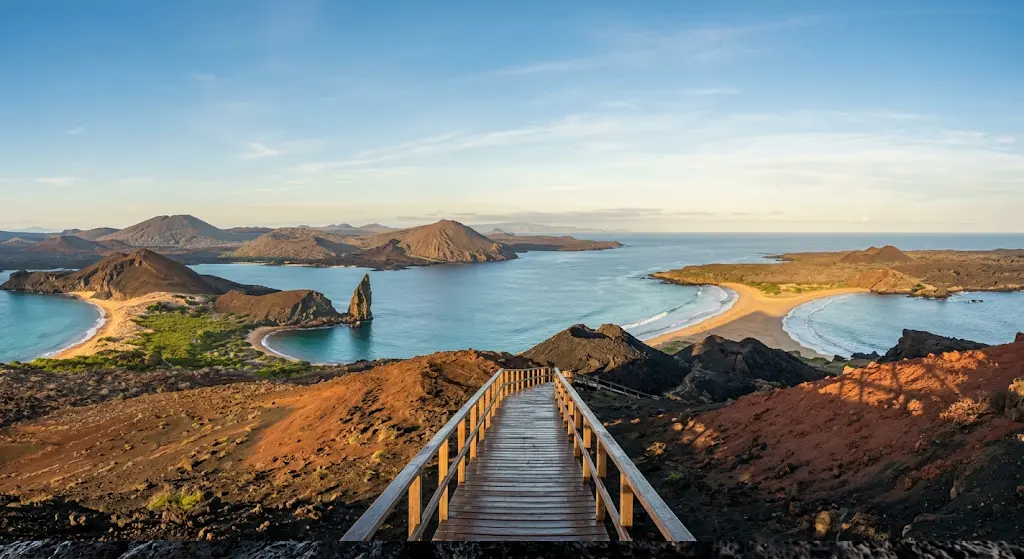
Go early. The light is softer before ten in the morning and the boardwalk gets busy after that. The Bartolomé Island day tour usually pairs the climb with a snorkel at the base of the rock, where penguins hunt.
2. Sierra Negra Volcano Crater on Isabela: The Second Largest Caldera on Earth
Nothing prepares you for the scale. After about an hour of walking through humid green highlands, the vegetation drops away and you are standing at the rim of a caldera roughly ten kilometres across. The far wall is a smudge on the horizon. The floor is a black lava field from eruptions still fresh enough to look wet.
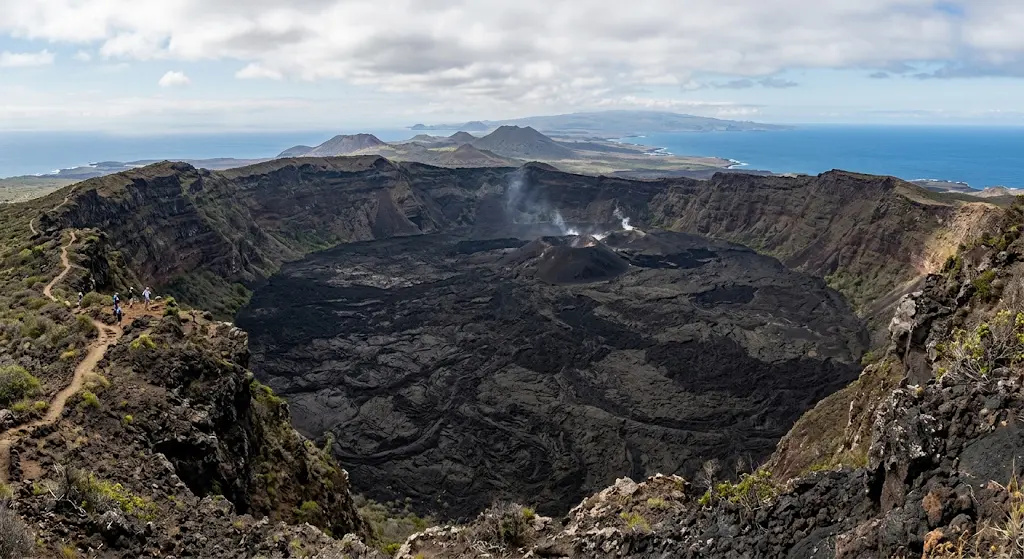
Weather is the deciding factor here. The rim clouds over often, so morning departures are your best chance at a clear crater. The Sierra Negra volcano day tour continues on toward Volcán Chico, where the fumaroles and oxidised reds start.
3. Las Grietas Trail and Overlook on Santa Cruz: A Crack in the Lava
Las Grietas is a narrow flooded fissure between two vertical lava walls, filled with clear brackish water where fresh and salt meet. The viewing platform above the gorge is the shot: two walls of black rock, a strip of glowing water at the bottom, and swimmers reduced to specks.
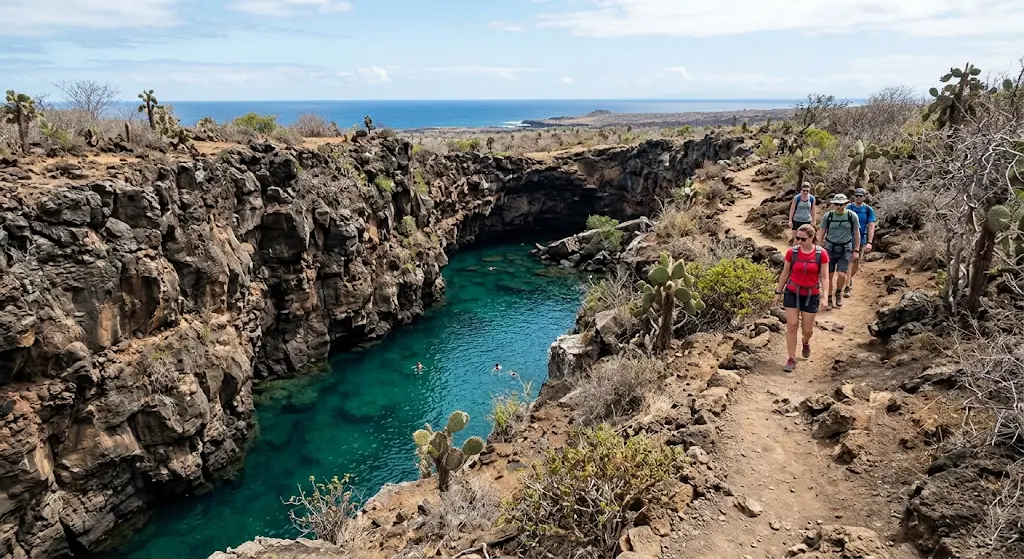
It is one of the few landscape sites you can reach on your own, with a short water taxi from Puerto Ayora and a twenty-minute walk. If you would rather have the highlands, the tortoise reserves and the lava tunnels covered in one go, the 180° Santa Cruz Island tour handles the logistics.
4. Tijeretas Hill on San Cristóbal: Frigatebirds and a Free Sunset
A short uphill trail from Puerto Baquerizo Moreno delivers one of the most generous views in the archipelago, and it costs nothing. From the lookout you get the cove of Tijeretas, the bay, the town and Kicker Rock on the horizon. Frigatebirds ride the updraft at eye level, which is a rare thing to photograph without a long lens.
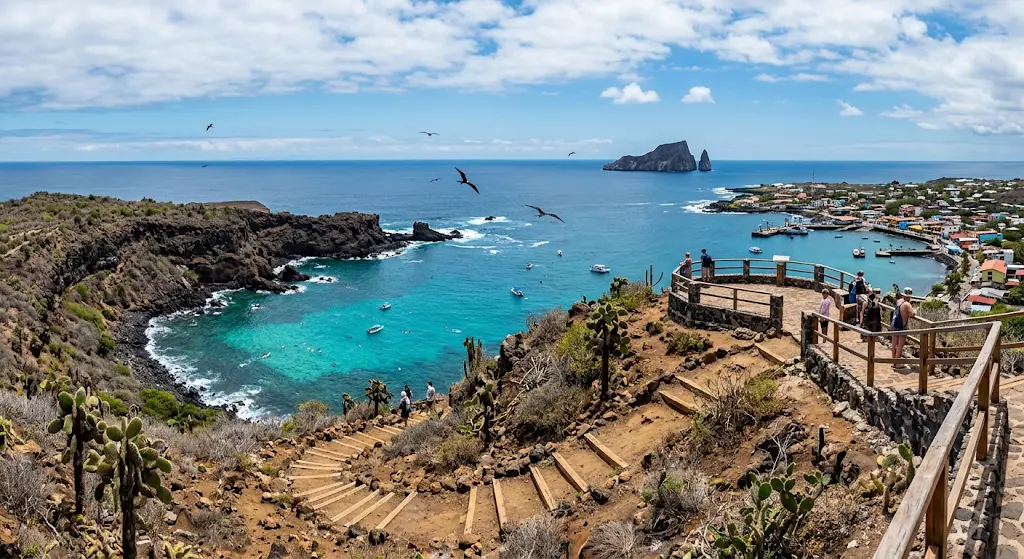
Come back at sunset for the colour. During the day, this coast is a good base for exploring further out on the 360° San Cristóbal Island tour or a half day at Lobos Island.
5. Dragon Hill Viewpoint on Santa Cruz: Land Iguanas and a Flamingo Lagoon
Cerro Dragón sits on the quiet northwestern coast of Santa Cruz, far from town. The trail climbs past a salt lagoon that sometimes holds flamingos, then opens onto a view across a forest of palo santo trees toward Daphne Major and the channel beyond. Yellow land iguanas live along the path, part of a population brought back from near collapse.
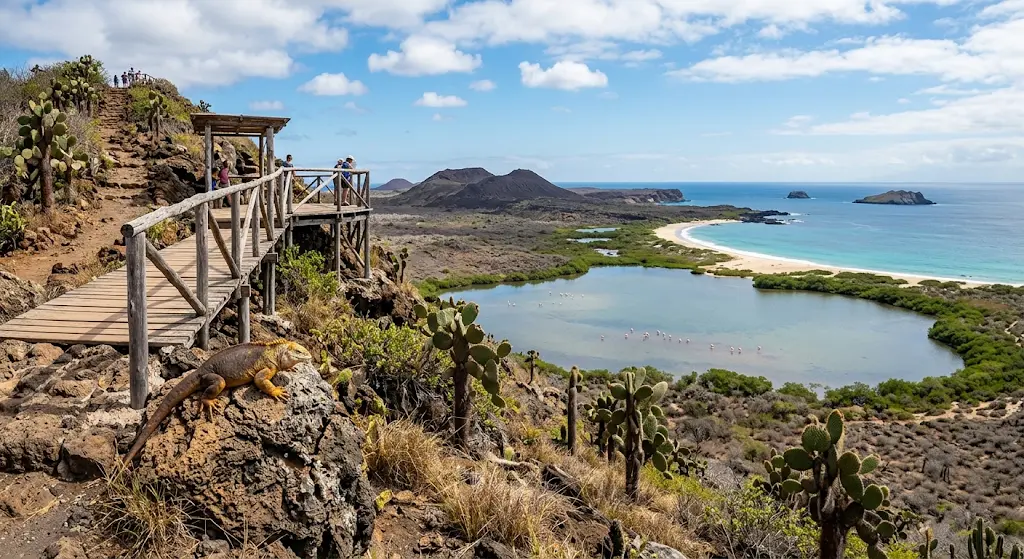
You cannot drive here. It is a visitor site reached only by boat, which means a cruise itinerary such as the Monique catamaran.
6. South Plaza Island Cliffs: Red Carpet, Blue Water, Nesting Seabirds
South Plaza is tiny and tilted, like a slab pushed up on one edge. You walk in across a flat covered in Sesuvium, which turns deep red in the dry season, dotted with prickly pear cactus. Then the island ends. The far side drops in a cliff where swallow-tailed gulls and tropicbirds nest, with sea lions barking below.
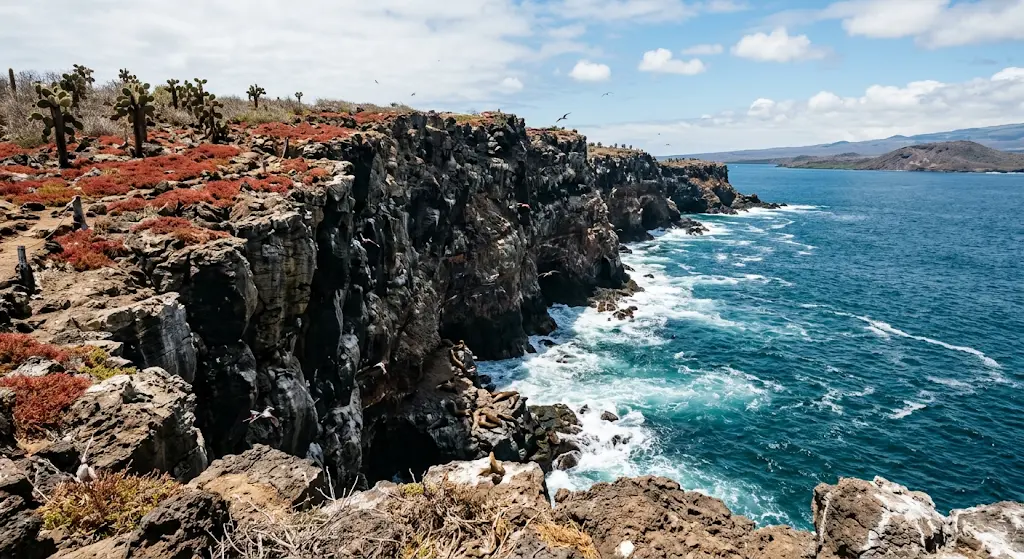
The red ground against the blue water is the kind of contrast that needs no editing. South Plaza is a boat-access site, often paired with Santa Fe Island on the same eastern route.
7. The Wall of Tears on Isabela: History With a View
El Muro de las Lágrimas is a wall of black basalt blocks about twenty-five metres high, built by prisoners of the penal colony that operated on Isabela until 1959. The story is grim, and the site is quiet in a way the rest of the islands are not. Climb the wooden staircase beside it and you get the coastline, the mangroves and the whole southern flank of the island.
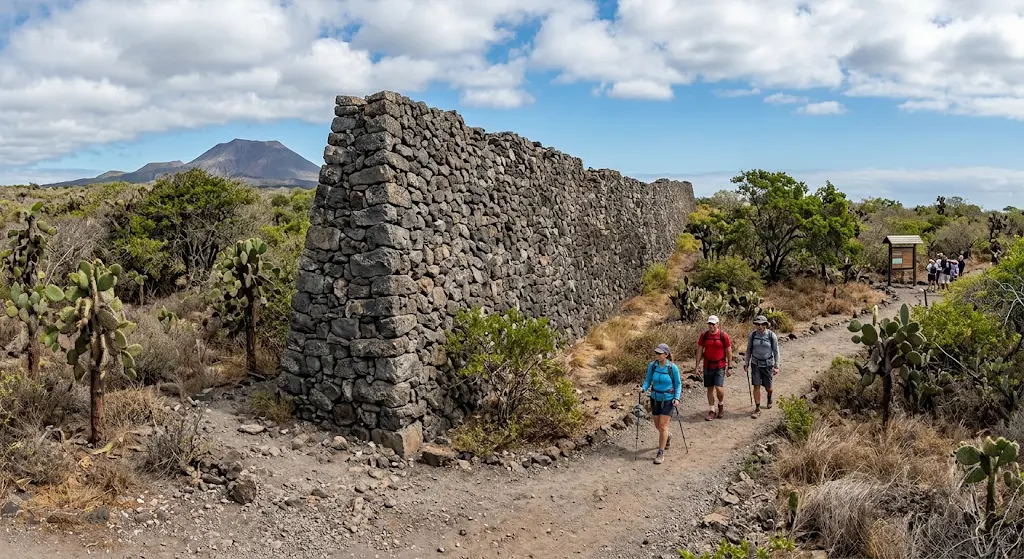
The road out from Puerto Villamil passes several lagoons and tortoise viewpoints, so rent a bike and take your time. It pairs well with an afternoon at Las Tintoreras, a few minutes from the pier.
8. The Charles Darwin Research Station Walk: Cactus Forest and Turquoise Bay
Most visitors go for the tortoise breeding pens and miss the walk itself. The path to the station runs through a dry forest of giant prickly pear cactus and ends at a small beach of white coral sand with mangroves and impossibly clear water. Marine iguanas sleep on the rocks all along the way.
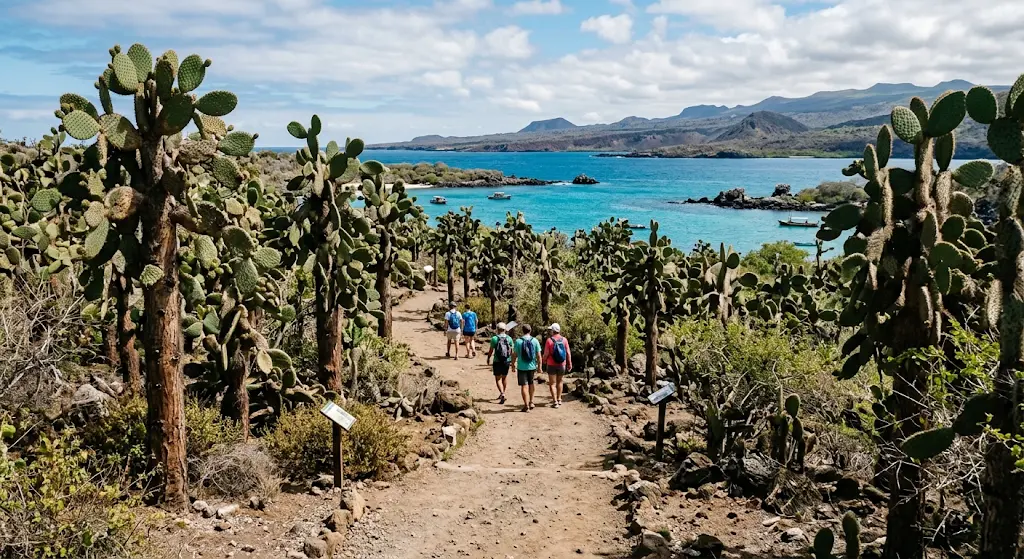
It is a ten-minute walk from central Puerto Ayora, which makes it the easiest photo on this list. Perfect for an arrival afternoon before an island day trip like Pinzón or North Seymour.
Which Galapagos Viewpoints Can You Reach on Your Own?
Roughly half of this list is open to independent travellers. Las Grietas, Tijeretas Hill, the Wall of Tears and the Darwin Station walk need nothing more than a good pair of shoes and a water bottle.
The other four are protected visitor sites. Bartolomé, Sierra Negra, Dragon Hill and South Plaza all require a licensed naturalist guide, and Dragon Hill and South Plaza are only on cruise itineraries. If you want several of them in one trip without backtracking, a multi-day route aboard a boat like the Golondrina covers ground that day tours from town simply cannot reach.
One last piece of advice: bring a wide angle and shoot in the first two hours of daylight. The equatorial sun climbs fast, and by eleven the contrast will flatten every one of these views.