
Kicker Rock rises straight out of the ocean off the west coast of San Cristóbal, a split tuff cone that looks, from one angle, like a sleeping sea lion. That is the origin of its Spanish name, León Dormido. The narrow channel between its two walls is one of the most famous snorkeling and diving sites in Galápagos.
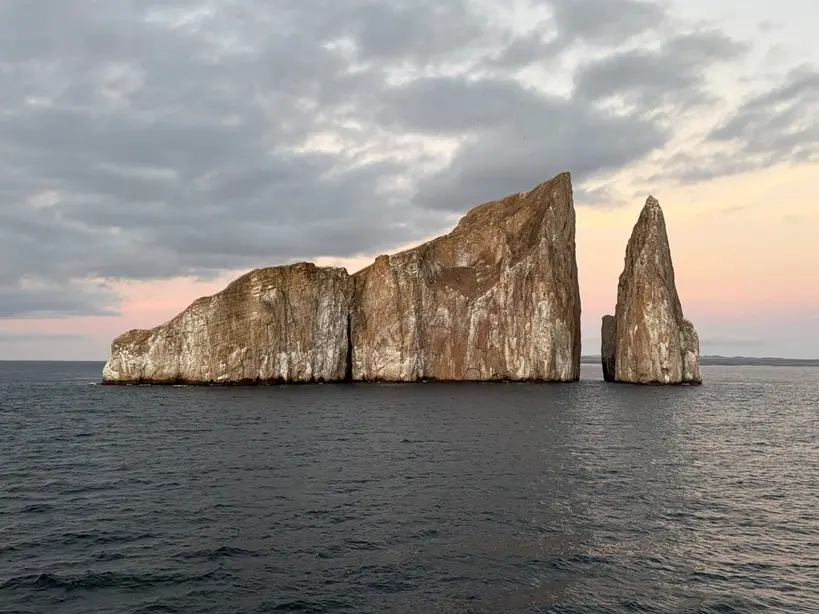
What makes it special is depth. The walls drop into deep blue water, so sharks, rays and turtles pass close to the surface while the bottom stays out of sight. This guide explains what lives around the rock, how snorkeling compares with diving and what to expect on the day tour from San Cristóbal.
| Feature | Snorkeling | Diving |
|---|---|---|
| Who can do it | Confident swimmers | Certified divers |
| Depth | Surface, over deep water | Along the walls and in the channel |
| Best chance for hammerheads | Sometimes seen below in clear water | Better, in the deeper water around the rock |
| Main wildlife | Galápagos sharks, turtles, rays, schools of fish | Same, plus closer views of sharks |
| Typical trip | Full day with two snorkel sessions and a beach stop | Two dives, booked with a dive center |
What Lives Around Kicker Rock
The rock attracts large animals because currents bring food along its walls. Galápagos sharks and white-tip reef sharks are seen on most trips, eagle rays and sea turtles glide along the walls, and schools of salema and other fish fill the channel. With clear water and some luck, scalloped hammerheads are seen below, especially in the cooler months.
Above water, frigatebirds and blue-footed boobies nest on the ledges, and sea lions often swim near the boat. No sighting is guaranteed, as with any wild site, but few places in the islands offer this mix of species on a single swim. Our guide to where to see hammerhead sharks explains when they are most likely.
Snorkeling at Kicker Rock
Snorkelers enter from the boat into open, deep water, with no beach or shallow area to stand on. That is why the site suits confident swimmers who feel comfortable floating far above the bottom. Wetsuits help with buoyancy and warmth, especially between June and November.
The Kicker Rock snorkeling tour leaves Puerto Baquerizo Moreno at 7:00 am. After a ride of about 45 minutes, the group snorkels twice, first along the outer walls and then through the channel. Groups are kept small, with no more than five snorkelers per guide, and an equipment fitting the day before is required.
Diving at Kicker Rock
Divers see the site from a different angle. They descend along the walls, where sharks pass at eye level and hammerheads are more likely in the deeper water. Dive centers in Puerto Baquerizo Moreno run day trips for certified divers. For those who want more, our comparison of day diving and liveaboards covers the options in more depth.
The Beach Stop
After lunch on board, the tour stops at a beach on the coast of San Cristóbal, usually Manglecito, Puerto Grande or Cerro Brujo, depending on park scheduling and the weather. These beaches are reached only by boat and are good places to rest, walk and watch sea lions. Our guide to things to do on San Cristóbal covers the rest of the island.
Is Kicker Rock Right for You?
Kicker Rock is the best day of many trips to Galápagos, but it suits some travelers more than others. Strong swimmers who enjoy deep water usually call it the highlight of their stay, while those who feel uneasy without a visible bottom may prefer calmer sites such as Isla Lobos. Being honest about comfort in open water is the best way to choose.
For those unsure, our comparison of Kicker Rock and Pinzón explains how the two snorkeling days differ in depth, wildlife and difficulty. Pinzón, reached from Santa Cruz, offers shallower snorkeling with similar species, which makes it a good alternative for less experienced swimmers.
Timing also matters. The water is warmer and calmer from January to May, while the cooler months from June to November bring more plankton and, often, more sharks. Either way, book a day or two ahead, attend the equipment fitting and bring a wetsuit if you feel the cold. Our wildlife calendar shows what to expect month by month. Pack a towel, a dry layer for the ride home and a waterproof bag for your phone, since spray reaches every seat on the boat.
Frequently Asked Questions About Kicker Rock
Can beginners snorkel at Kicker Rock?
Only confident swimmers. The site is deep open water with no place to stand, so beginners usually prefer calmer spots such as Isla Lobos.
Will I see hammerhead sharks at Kicker Rock?
Sometimes. Hammerheads pass in the deeper water around the rock, more often in the cooler months, but sightings are never guaranteed.
How far is Kicker Rock from Puerto Baquerizo Moreno?
About 45 minutes by boat from the main dock on San Cristóbal.
Is it better to snorkel or dive at Kicker Rock?
Diving gives closer views of sharks along the walls, while snorkeling shows the same species from above. Both are excellent.
What is the best time of year to visit Kicker Rock?
Any month works. January to May has warmer, calmer water, while June to November often brings more sharks and cooler water.
Do I need a wetsuit at Kicker Rock?
It is recommended, especially from June to November. Wetsuits also help with buoyancy in deep water.