Galápagos has a reputation as an expensive destination, and some costs cannot be avoided: flights from the mainland, the national park fee and the transit card. Everything else is flexible. Travelers who stay on land, choose their day tours carefully and use the free sites around each town can see a great deal for far less than a cruise.
This guide lists what a budget trip really costs, item by item, and where the savings are. Prices change with the season and between operators, so treat the figures as a guide and confirm them when you book.
| Item | Typical Cost | How to Save |
|---|---|---|
| Flight from mainland Ecuador | Several hundred dollars return | Fly from Guayaquil, book early, avoid holidays |
| National park fee | USD 200 per foreign adult | Not avoidable; USD 100 for Mercosur and Andean citizens |
| Transit Control Card | USD 20 per person | Not avoidable |
| Ferry between islands | Around USD 30 to 40 per crossing | Plan a route without repeated crossings |
| Budget hotel or hostel | From about USD 30 to 60 per night | Book family run guesthouses, share rooms |
| Food | Set lunches are the cheapest meal | Eat where locals eat, buy water in large bottles |
| Day tours | From USD 70 to 350 per person | Mix one or two boat trips with free days |
The Fixed Costs
Three costs apply to every visitor. The return flight from Guayaquil or Quito usually runs to several hundred dollars and rises sharply around holidays. The national park fee is USD 200 for most foreign adults and USD 100 for citizens of Mercosur and Andean Community countries, and the Transit Control Card adds USD 20. Our guide to the park fee and transit card explains when and how each is paid.
Flying from Guayaquil is usually cheaper than from Quito, and booking several weeks ahead helps. Avoid Christmas, Easter week and July and August if dates are flexible.
Sleeping and Eating for Less
Puerto Ayora, Puerto Villamil and Puerto Baquerizo Moreno all have simple guesthouses and hostels, many run by local families. Rooms with fans instead of air conditioning cost less, and Isabela often offers the best value. Our guide on where to stay in Galápagos compares the three towns.
Food is cheaper than many visitors expect. Local restaurants serve a set lunch, soup and a main dish with a drink, at a fraction of the price of tourist menus. In Puerto Ayora, the street of kiosks known as Charles Binford fills in the evening with grilled fish and seafood at fair prices. Supermarkets on Santa Cruz are the best place to stock up on snacks and water.
Choosing Day Tours Wisely
Day tours are where budgets grow fastest, so choose by priority. The Sierra Negra volcano tour costs USD 70, the Los Túneles snorkeling tour USD 140 and the Santa Fe snorkeling tour USD 140, while the longest trips, to Bartolomé or North Seymour, cost USD 340 to 350. Our full list of Galápagos day tour prices compares every option.
Two or three boat trips combined with free days usually give the best balance. Our ranking of the best Galápagos day tours helps decide which trips are worth the money for each interest.
Free Things to Do
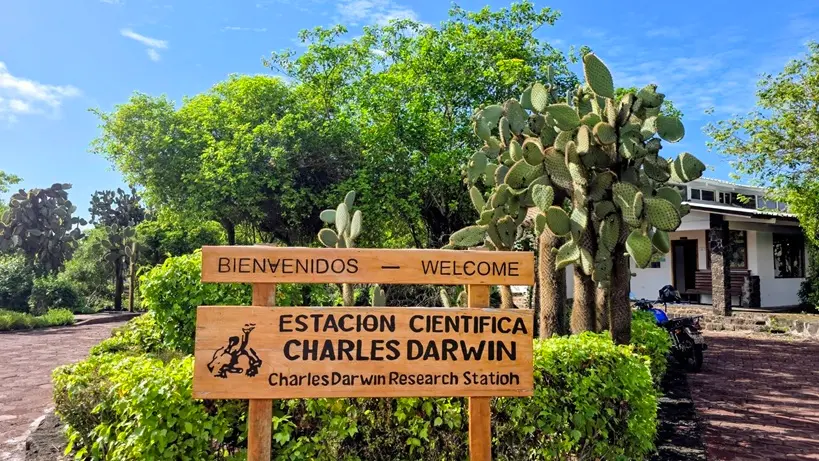
Some of the best experiences in Galápagos cost nothing. Tortuga Bay, the Charles Darwin Research Station and the fish market on Santa Cruz are free. On San Cristóbal, La Lobería, Playa Mann and Cerro Tijeretas offer sea lions and snorkeling from shore. On Isabela, Concha de Perla, the flamingo lagoons and the tortoise breeding center are a walk or bike ride from town. Las Grietas on Santa Cruz costs only a water taxi.
How to Plan a Budget Trip
A realistic budget trip combines a land based route with careful choices. A week split between Santa Cruz and Isabela, or Santa Cruz and San Cristóbal, keeps ferry crossings to a minimum and allows two or three boat trips with free days in between. Our seven day island hopping itinerary follows that pattern and can be adapted to a tighter budget.
The biggest mistake is cutting the wrong costs. Skipping every boat trip saves money but misses the uninhabited islands that make Galápagos unique. Choosing one or two of the trips that matter most, and filling the other days with free beaches and trails, gives a far richer experience for the same money.
Ferries between the islands can be booked in advance through operators such as Galaferry, which helps in high season when boats fill up. Carry cash for small purchases, as card payment is not accepted everywhere and ATMs are scarce outside Puerto Ayora. With those habits, Galápagos becomes a destination for careful travelers, not only for large budgets. Solo travelers can cut costs further by sharing taxis and joining group tours, which price per person rather than per boat.
Frequently Asked Questions About Visiting Galápagos on a Budget
Can you visit Galápagos on a budget?
Yes. Staying on land, eating at local restaurants and mixing a few boat trips with free sites keeps costs far below a cruise.
What is the cheapest way to see Galápagos?
A land based trip on Santa Cruz and one other island, with two or three day tours and plenty of free activities.
How much does a week in Galápagos cost on a budget?
It depends on flights and tours, but the park fee, transit card, hostels, food, ferries and two or three day tours make up most of it.
Which island is cheapest to stay on?
Isabela often has the best value accommodation, while Santa Cruz has the most choice and the cheapest supermarkets.
Are there free things to do in Galápagos?
Many. Tortuga Bay, La Lobería, Concha de Perla, the Darwin Station and several snorkeling coves cost nothing.
Is a cruise or a land based trip cheaper?
A land based trip is usually cheaper, especially for solo travelers, although it reaches fewer remote islands than a cruise.