
Visitors who are not on a cruise can sleep on only four islands in Galápagos: Santa Cruz, San Cristóbal, Isabela and Floreana. The first three hold almost all the hotels, and each one gives access to a different set of day tours. Choosing a base is therefore less about the hotel and more about the wildlife and places you want to reach.
Many travelers combine two or three islands in one trip. Others prefer a single base to avoid packing and ferries. This guide compares the three main islands so the choice can follow the trip you have in mind.
| Island | Town | Best For | Day Tours From Here | Pace |
|---|---|---|---|---|
| Santa Cruz | Puerto Ayora | First visits, variety, convenience | Bartolomé, North Seymour, Santa Fe, Pinzón, Floreana | Busiest town in the islands |
| San Cristóbal | Puerto Baquerizo Moreno | Sea lions, snorkeling, easy airport access | Kicker Rock, Isla Lobos, Española | Relaxed small city |
| Isabela | Puerto Villamil | Volcanoes, penguins, quiet beaches | Los Túneles, Sierra Negra, Las Tintoreras | Slow village pace |
Santa Cruz: The Central Base
Santa Cruz is the most practical base for a first trip. It sits in the middle of the archipelago, so boats reach many central islands in a single day, and Puerto Ayora has the widest choice of hotels, restaurants, ATMs and services. Ferries to Isabela and San Cristóbal leave from its main pier, which makes it the hub of most island hopping plans.
The trade-off is that Puerto Ayora is the busiest town in Galápagos. Travelers looking for quiet evenings may find it less charming than the other two. Our guide to things to do on Santa Cruz lists what the island offers beyond the day tours.
San Cristóbal: The Easy Arrival
San Cristóbal has an airport at the edge of town, so the hotel is minutes away after landing. Sea lions live along the waterfront and on the town beaches, and several of the best snorkeling spots can be reached on foot. It is the base for Kicker Rock and for the albatrosses of Española.
It is farther from the central islands, so day trips to Bartolomé or North Seymour are not practical from here. Our guide to things to do on San Cristóbal covers the island in detail.
Isabela: The Quiet Choice
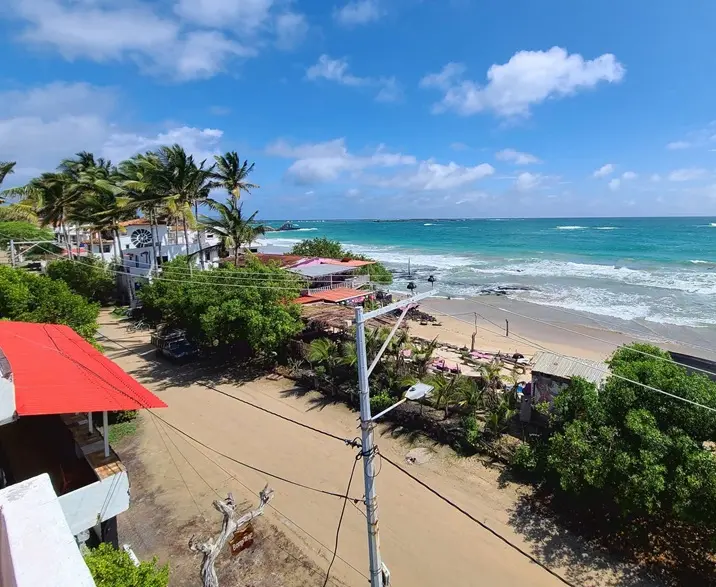
Isabela feels the most remote. Puerto Villamil has sand streets, a long beach and lagoons with flamingos, and evenings are quiet. The island’s highlights, Los Túneles and Sierra Negra, are among the most memorable tours in Galápagos, and penguins are often seen near town.
Isabela has fewer services and only a few ATMs, and reaching it means a ferry of about two hours from Santa Cruz. Our guide to things to do on Isabela explains how many nights it deserves.
Combining Islands
Most travelers with a week or more combine two or three bases. A typical route spends three or four nights on Santa Cruz, two or three on Isabela and three on San Cristóbal, flying into one airport and out of the other. Our seven day island hopping itinerary follows that pattern, and our guide to 5, 7 or 10 days in Galápagos adapts it to shorter and longer trips.
The ferries between islands take about two hours and leave early in the morning and in the afternoon. They can be booked through operators such as Galaferry. Arriving at the right airport also matters, as our guide to Baltra and San Cristóbal airports explains.
Choosing by What You Want to See
The best base depends less on hotels than on priorities. Travelers who want the widest variety of wildlife and the most day trip options should start on Santa Cruz. Those who care most about sea lions, snorkeling from shore and an easy arrival will enjoy San Cristóbal. Visitors drawn to volcanoes, penguins and a slower pace will find Isabela worth the extra ferry ride.
Time is the other factor. With four or five days, one base on Santa Cruz avoids losing hours to ferries. With a week, two islands give a richer picture without rushing. With ten days or more, all three inhabited islands fit comfortably, and each move adds new landscapes and species rather than repeating the same experiences. Leave the last night near your departure airport, so a rough sea or a late ferry cannot put the flight at risk.
Whatever the choice, book the main day tours early in high season, as boats have fixed capacity and popular trips fill first. Our comparison of the best Galápagos day tours helps match each tour to the island where you will be staying.
Frequently Asked Questions About Where to Stay in Galápagos
Which island is best to stay on in Galápagos?
Santa Cruz suits most first trips because of its central position and choice of day tours. San Cristóbal and Isabela suit specific interests.
Can you stay on just one island in Galápagos?
Yes. Santa Cruz works as a single base for four or five days, with boat trips to several other islands without changing hotels.
Is Isabela or San Cristóbal better?
Isabela suits travelers who want volcanoes, penguins and quiet. San Cristóbal suits those who want sea lions, snorkeling from shore and easy airport access.
How do you travel between the inhabited islands?
By ferry, about two hours between Santa Cruz and Isabela or San Cristóbal, or by small inter-island planes at a higher price.
Can you stay on Floreana?
Yes, but options are few and boats are infrequent. Most travelers visit Floreana on a day trip from Santa Cruz.
How many nights should I spend on each island?
Three or four nights on Santa Cruz and two or three on Isabela and San Cristóbal work well for a trip of a week or more.