Santa Cruz sits in the middle of the archipelago, and that position explains why most visitors spend at least a few nights here. Puerto Ayora, on its south coast, is the largest town in Galápagos, with the widest choice of hotels, restaurants and tour operators, and boats leave every morning for the central islands.
The island also rewards days without a boat. Beaches, lava crevices, highland forest and giant tortoises are all reachable from town on foot, by water taxi or by a short drive. This guide covers both sides: what to do on Santa Cruz itself and which day trips work best from here.
| Place | How to Get There | Time Needed | Highlight |
|---|---|---|---|
| Tortuga Bay | 2.5 km walk from town | Half a day | Marine iguanas and a calm swimming cove |
| Las Grietas | Water taxi and short walk | 2 to 3 hours | Clear water between lava walls |
| Charles Darwin Research Station | Walk from town | 1 to 2 hours | Giant tortoise breeding program |
| Highlands and tortoise reserves | Taxi or guided tour | Half a day | Wild giant tortoises and lava tunnels |
| Boat day trips | From the Itabaca Channel or the harbor | Full day | Bartolomé, North Seymour, Santa Fe, Pinzón |
Puerto Ayora on Foot
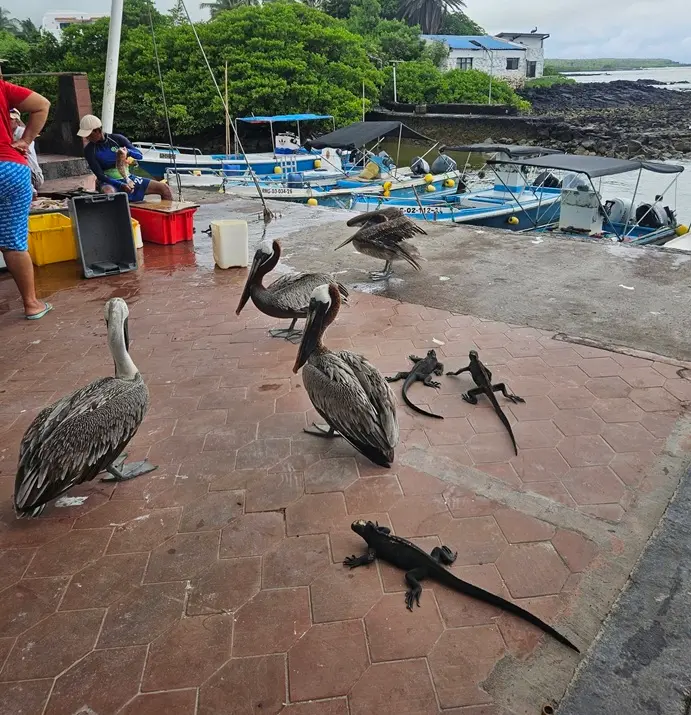
The Charles Darwin Research Station, at the east end of town, is the place to understand the conservation work behind the islands. Its breeding center raises young tortoises for release on the islands where their populations collapsed. On the way back, the fish market on the waterfront draws sea lions, pelicans and herons that wait patiently for scraps as fishermen clean the morning catch.
Tortuga Bay is reached by a paved path of about 2.5 km that starts at the top of town. The path is open from 6 am to 6 pm, and visitors sign in at the park office at the entrance. The long main beach is for walking only, with marine iguanas on the sand, while the sheltered cove at its far end is safe for swimming and kayaking.
Las Grietas and the Coast
Las Grietas is a deep crack in the lava filled with a mix of fresh and salt water, so clear that fish are visible several meters down. A water taxi crosses the bay from the main pier for about a dollar, and a short trail continues past Playa de los Alemanes. Go early, before the day tours return and the crevice fills with swimmers.
El Garrapatero, on the east coast, is quieter and needs a taxi. Its beach and lagoon attract flamingos and ducks, and the drive passes through farmland most visitors never see.
The Highlands
The road from Puerto Ayora to the north climbs into the Scalesia forest, a misty zone where the vegetation changes completely. Los Gemelos, two collapsed craters beside the road, are a short stop, and several farms and reserves let visitors walk among wild giant tortoises grazing in the pastures. Lava tunnels near the reserves can be explored with a flashlight.
The easiest way to see all of this in one day is the Santa Cruz 180° tour, which combines the highlands, the tortoises and the coast with transport and a guide. Our guide to where to see giant tortoises compares the reserves in more detail.
Day Trips From Santa Cruz
Santa Cruz is the best base for boat trips to the central islands. The Bartolomé Island day tour climbs to the most photographed view in Galápagos and adds snorkeling with penguins. The North Seymour day tour is the classic trip for frigatebirds and blue-footed boobies.
For snorkeling, the Santa Fe snorkeling tour and the Pinzón snorkeling tour offer sea lions, turtles and reef fish in clear water. The Floreana land tour adds history, highland tortoises and a quiet village on a different island. Most boat tours include hotel pickup in Puerto Ayora, and those leaving from the Itabaca Channel start early in the morning.
Why Santa Cruz Works as a Base
Santa Cruz combines the two things travelers need most in Galápagos: easy access to wildlife on land and the widest choice of boat trips at sea. A stay of four or five nights allows a balance between free days on the island and day tours to the central islands, without spending hours on ferries between bases.
The island also makes logistics simpler. Baltra airport is about an hour away, ferries to Isabela and San Cristóbal leave from the main pier, and Puerto Ayora has the most ATMs, pharmacies and supermarkets in the islands. Our guide to getting from Baltra to Puerto Ayora explains the arrival in detail, and the ferries between islands can be booked online through operators such as Galaferry.
The best plan alternates days. A morning at Tortuga Bay or Las Grietas after a long boat trip gives time to rest, and the highlands fit well on the day of arrival or departure. With that rhythm, Santa Cruz offers a complete picture of Galápagos even for travelers who never sleep on another island. In high season, book the boat trips a few weeks ahead, since each boat carries a fixed number of passengers.
Frequently Asked Questions About Santa Cruz Island
How many days should I spend on Santa Cruz?
Four or five nights allow two or three boat trips plus free days for Tortuga Bay, Las Grietas and the highlands.
Can you swim at Tortuga Bay?
Not on the main beach, which has strong currents. Swimming is allowed in the sheltered cove at the far end of the bay.
Do I need a guide to visit Las Grietas?
No. Las Grietas can be visited independently by water taxi and a short walk. A guide is needed only for national park boat trips.
Where can I see giant tortoises on Santa Cruz?
At the Charles Darwin Research Station in town and, in the wild, at the highland reserves and farms near Santa Rosa.
Which day trips leave from Santa Cruz?
Boat tours to Bartolomé, North Seymour, Santa Fe, Pinzón and Floreana all leave from Santa Cruz, most with hotel pickup.
Is Puerto Ayora a good place to stay?
Yes. It has the widest range of hotels, restaurants and services in Galápagos and is the most convenient base for day trips.