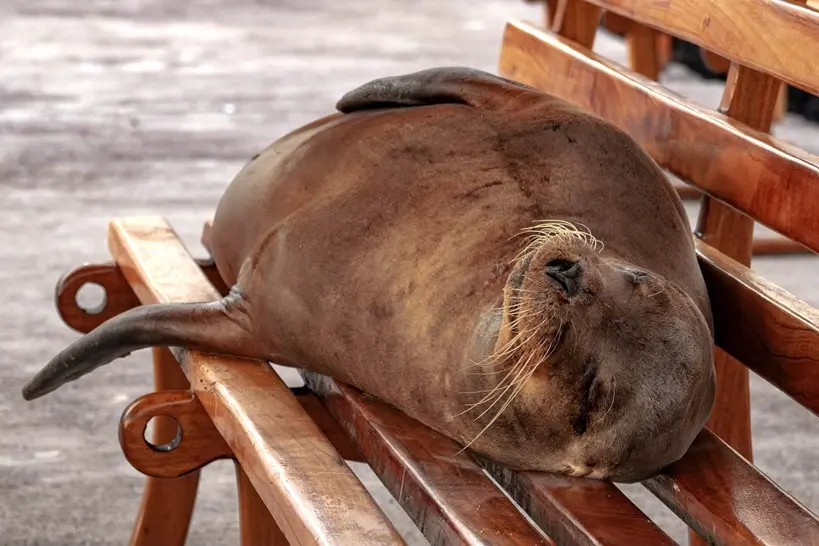
San Cristóbal is the easternmost inhabited island in Galápagos and one of the oldest. Its town, Puerto Baquerizo Moreno, is the provincial capital, yet it feels relaxed, with sea lions sleeping on the benches of the waterfront and on every small beach. The airport sits at the edge of town, which makes the island an easy start or end to a trip.
San Cristóbal has more free sites within walking distance of town than any other island, and it is the departure point for Kicker Rock, Isla Lobos and Española. This guide covers what to see on your own, which tours to book and how to plan the days.
| Place | How to Get There | Cost | Highlight |
|---|---|---|---|
| La Lobería | 30 minute walk or short taxi | Free | Sea lions, turtles and marine iguanas |
| Interpretation Center and Cerro Tijeretas | Walk from town | Free | History, frigatebirds and snorkeling |
| Playa Mann and Punta Carola | Walk from town | Free | Beaches with sea lions |
| El Junco, Galapaguera and Puerto Chino | Taxi or the 360° tour | Taxi or tour | Highland lake, tortoises and a white beach |
| Kicker Rock, Isla Lobos and Española | Boat tour | Tour price | Sharks, sea lions and albatrosses |
Around Puerto Baquerizo Moreno
The waterfront is the first stop. Sea lions rest on the sand, the benches and the steps of the docks, and pups play in the shallow water at dusk. Keep a distance of two meters and never touch them, as the park rules require.
A short walk west leads to Playa Mann, a town beach, and to the Interpretation Center, a free museum on the geology, wildlife and human history of the islands. Trails from the center climb to Cerro Tijeretas, a hill where frigatebirds nest, with a cove below that is one of the best places for snorkeling from shore. Punta Carola, a nearby beach, is a good place to watch surfers and marine iguanas.
To the south, La Lobería is a rocky bay with a large sea lion colony, turtles in the water and marine iguanas on the lava. It is about 2.5 km from town, a walk of half an hour or a short taxi ride.
The Highlands and the South Coast
The only road across the island climbs to El Junco, a freshwater lake in an old crater at about 600 meters, one of very few permanent lakes in the archipelago. It continues to the Galapaguera de Cerro Colorado, a reserve where giant tortoises live in semi-natural conditions, and ends near Puerto Chino, a white sand beach reached by a short trail.
These three stops are far apart, so most visitors combine them with a taxi for half a day or join the San Cristóbal 360° tour, which also circles the island by boat.
Boat Tours From San Cristóbal
Kicker Rock, or León Dormido, is a split volcanic rock rising from deep water. Snorkelers often see Galápagos sharks, rays and turtles, and hammerheads are sometimes spotted from the surface in the deeper channel. The Kicker Rock tour is the most requested day trip on the island, and our comparison of Kicker Rock and Pinzón explains what to expect.
Isla Lobos, a short ride from town, offers calm snorkeling with young sea lions and nesting blue-footed boobies on the Isla Lobos day tour. Española, the oldest island, is famous for its waved albatrosses, which nest there roughly from April to December. The Española day tour leaves from San Cristóbal, and our guide to the Española albatross season has the details.
Planning Your Days on San Cristóbal
Three or four nights work well on San Cristóbal. One day can go to the free sites around town, one to Kicker Rock and one to Española or Isla Lobos, leaving a half day for the highlands. Travelers who also want Santa Cruz and Isabela can take the ferry from here, which avoids repeating the same crossing at the end of the trip.
The airport location changes how the island fits into a trip. Arriving in San Cristóbal means sleeping near the beach within minutes of landing, and leaving from here allows a last morning at La Lobería or Playa Mann before the flight. Our guide to Baltra and San Cristóbal airports explains how to combine both.
San Cristóbal is also the island where wildlife and town life mix most closely. Sea lions on the waterfront, frigatebirds over Cerro Tijeretas and turtles off La Lobería are part of a normal day here, even without a tour. That makes it an easy place to start a trip and a hard one to leave. Bring a mask and snorkel of your own if you have one, since many of the best shore spots are a short walk from the hotels.
Frequently Asked Questions About San Cristóbal Island
How many days should I spend on San Cristóbal?
Three or four nights allow Kicker Rock, Española or Isla Lobos and the free sites around town without rushing.
Can you snorkel from shore on San Cristóbal?
Yes. The cove below Cerro Tijeretas and La Lobería are both good for snorkeling without a boat, in calm conditions.
Is Kicker Rock worth it?
For most visitors it is the highlight of San Cristóbal, with sharks, rays and turtles around the rock. It suits confident swimmers.
When can you see albatrosses on Española?
Waved albatrosses are present roughly from April to December, with courtship displays most active in the middle of that period.
Is the airport far from town?
No. San Cristóbal airport is at the edge of Puerto Baquerizo Moreno, only a few minutes by taxi from most hotels.
Can I visit El Junco on my own?
Yes, by taxi. El Junco, the Galapaguera and Puerto Chino are far apart, so most visitors hire a taxi or join a tour.