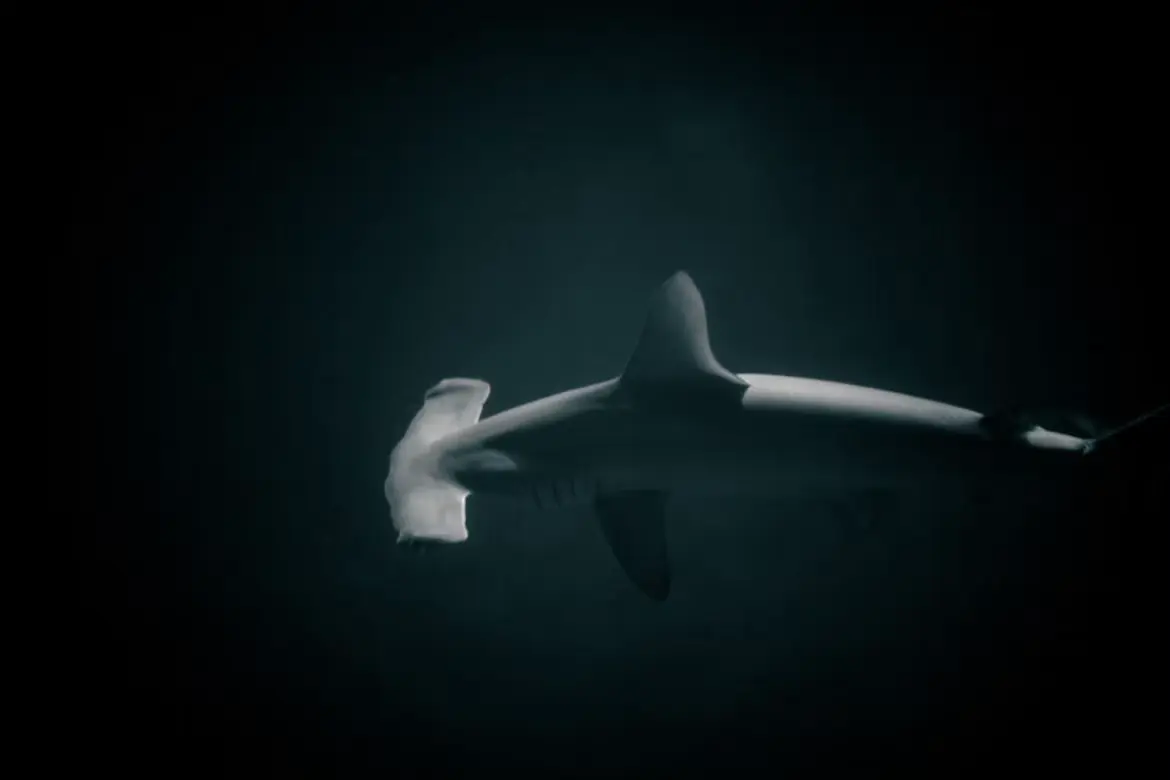
Schools of scalloped hammerhead sharks are one of the main reasons divers travel to Galápagos. Around the northern islands of Darwin and Wolf, dozens and sometimes hundreds of hammerheads gather along the reef walls, forming some of the largest aggregations recorded anywhere.
The sharks are not limited to the remote north. Hammerheads are seen regularly at Kicker Rock off San Cristóbal, where snorkelers can watch them from the surface, and at Gordon Rocks near Santa Cruz, a demanding day dive. Each site requires a different level of skill and a different type of trip, and the chances of an encounter change with the season.
Below, each hammerhead site is described with the skill it requires, the type of trip involved and the way conditions change through the year.
| Site | Activity | Access | Skill Level | Encounter Odds |
|---|---|---|---|---|
| Darwin Island | Diving | Liveaboard only | Advanced | Very high, large schools |
| Wolf Island | Diving | Liveaboard only | Advanced | Very high |
| Gordon Rocks | Diving | Day dive from Santa Cruz | Advanced | Good, smaller groups |
| Kicker Rock | Snorkeling or diving | Day tour from San Cristóbal | Confident deep water swimmer | Good, not guaranteed |
| Cousins Rock and Punta Vicente Roca | Diving | Liveaboard | Intermediate | Possible |
The Species and Why It Gathers Here
The scalloped hammerhead, Sphyrna lewini, typically reaches 1.5 to 2 meters in Galápagos, with larger females. It is listed as Critically Endangered on the IUCN Red List, mainly because of fishing pressure across its global range, which makes the protected waters of the Galápagos Marine Reserve especially important.
By day, hammerheads gather at cleaning stations on rocky reefs, where small fish such as barberfish remove parasites from their skin. The sharks hold position in the current above these sites, often in schools, before dispersing into open water at night to feed. The remote islands of Darwin and Wolf, surrounded by deep water and strong currents, offer ideal conditions, and since 2016 they have been protected as a no-take marine sanctuary.
Darwin and Wolf, the Liveaboard Option
The densest schools occur at Darwin and Wolf, more than 160 km northwest of Isabela. Reaching them requires a liveaboard dive cruise with an overnight navigation from the central islands. Dives typically take place along walls and boulder slopes in strong currents, with hammerheads passing in the blue alongside Galápagos sharks, eagle rays and, in season, whale sharks.
Boats such as the Humboldt Explorer dedicate several days to the two islands. Our Darwin and Wolf diving guide describes the individual dive sites, and our guide to Galápagos diving requirements explains the certification and experience operators expect.
Gordon Rocks, the Advanced Day Dive
Gordon Rocks is the eroded rim of a volcanic crater off the northeast coast of Santa Cruz, reached on a day trip from Puerto Ayora or the Itabaca Channel. Hammerheads are seen singly or in small groups at depths of roughly 15 to 30 meters. Strong, shifting currents give the site its nickname, the Washing Machine, and operators require advanced certification. Our Gordon Rocks diving guide covers conditions in detail.
Kicker Rock, Hammerheads for Snorkelers
Kicker Rock, known locally as León Dormido, is the best option for travelers who do not dive. The Kicker Rock day tour leaves Puerto Baquerizo Moreno at 07:00 and includes two snorkeling sessions around the twin rock towers. The deep channel between them is where hammerheads, Galápagos sharks, eagle rays and sea turtles pass.
Snorkelers usually see hammerheads below them rather than at the surface, so clear, calm water improves the odds. The site has no beach entry or shallow shelf, so participants need to be confident swimmers in deep water. The tour keeps a ratio of five snorkelers per guide and requires an equipment fitting the day before. Our comparison of Kicker Rock and Pinzón helps decide between the two shark snorkeling tours.
Kicker Rock Day Tour
No scuba certification required: drift snorkel the deep channel between León Dormido’s volcanic towers to spot scalloped hammerheads, Galápagos sharks, and eagle rays.
Seasons and Encounter Odds
Hammerheads are present year round, but conditions differ by season. During the cool season, from June to November, colder water and strong upwelling are associated with larger schools in many sites, along with whale sharks at Darwin and Wolf. During the warm season, from December to May, the sea is calmer and visibility is often better, although sharks may stay deeper. Our guide to the best time to dive Galápagos compares the two seasons month by month.
Behaving Well in the Water
Hammerheads are shy. Exhaled bubbles, sudden movements and splashing push them away, which is why divers are asked to stay close to the reef, breathe slowly and avoid chasing. Snorkelers should float quietly at the surface and follow the guide’s position. National park rules prohibit touching or feeding wildlife, and divers are asked to keep a respectful distance at all times.
The Value of a Shark Sanctuary
The hammerhead schools of Galápagos have become one of the archipelago’s most recognized natural phenomena, yet they belong to a species in steep global decline. Outside protected areas, scalloped hammerheads are caught for their fins and as bycatch in fisheries targeting other species, and their slow reproduction leaves populations unable to recover quickly from losses.
Within the Galápagos Marine Reserve, and especially in the Darwin and Wolf sanctuary, the sharks find conditions that are now rare elsewhere: abundant food, cleaning stations and freedom from fishing. Research in the reserve has also shown that hammerheads move widely across the eastern Pacific, linking Galápagos with other protected areas such as Cocos Island and Malpelo. Their protection therefore depends on regional cooperation, not on a single marine park.
For visitors, a hammerhead encounter, whether from the surface at Kicker Rock or among a school at Darwin, is a direct measure of what effective marine protection can achieve. The tourism value of living sharks also strengthens the economic case for keeping these waters closed to fishing, an argument that has helped shape conservation policy in Ecuador for decades.
Frequently Asked Questions About Hammerhead Sharks in Galápagos
Can you see hammerhead sharks while snorkeling in Galápagos?
Yes. Kicker Rock off San Cristóbal is the most reliable snorkeling site, with hammerheads passing through the deep channel between the rock towers. Sightings are common but never guaranteed.
Where are the biggest schools of hammerheads in Galápagos?
The largest schools gather around Darwin and Wolf, the remote northern islands. They are reached only on liveaboard dive cruises and require advanced diving experience.
What is the best time of year to see hammerheads in Galápagos?
Hammerheads are present all year. Many divers report larger schools in the cool season, from June to November, while the warm season offers calmer seas and better visibility.
Are hammerhead sharks dangerous to swimmers?
Scalloped hammerheads are shy and tend to avoid people. Incidents with snorkelers or divers in Galápagos are extremely rare, and guides keep groups at a respectful distance.
Can beginner divers see hammerheads in Galápagos?
Occasional sightings occur on easier dives near North Seymour and Mosquera Islet. The reliable sites, Gordon Rocks, Darwin and Wolf, require advanced certification and current experience.
Is Kicker Rock or Gordon Rocks better for hammerheads?
Gordon Rocks is a dive site for advanced divers, with frequent hammerhead sightings at depth. Kicker Rock is accessible to snorkelers and divers, which makes it the better option for most travelers.