Galápagos is not a beginner destination. Its best-known sites, especially Darwin and Wolf, combine strong and changing currents, cold water, surge and deep drop-offs far from shore. Liveaboard operators set entry requirements to make sure that every diver on board can manage those conditions safely.
Those requirements are broadly consistent across the fleet, although each boat sets its own rules. What follows is the certification, experience, insurance and skill set that Galápagos dive cruises typically ask for, along with the national park rules that apply underwater.
| Requirement | Typical Standard | Notes |
|---|---|---|
| Certification | Advanced Open Water or equivalent | Stated explicitly by several operators |
| Logged dives | Around 50 | Experience in current is expected |
| Recent experience | Diving within the past year or so | Returning divers should refresh first |
| Dive accident insurance | Required by some boats | Strongly recommended on all |
| Nitrox certification | Needed to dive nitrox | Some boats run the course on board |
| Dive computer | Personal computer for each diver | Check rental availability in advance |
| Safety equipment | Surface marker buoy, signaling device | Some boats issue a personal rescue GPS |
Certification and Logged Dives
Most Galápagos liveaboards expect Advanced Open Water certification or an equivalent from another agency. The Aqua, for example, requires Advanced Open Water, at least 50 logged dives and dive accident insurance before boarding. Other boats state their expectations in terms of conditions rather than numbers: the Danubio Azul and several others describe themselves as suited to divers who have the certification and the dives to handle current, and advise against them for new divers.
Bring proof. Certification cards and a logbook, digital or paper, may be checked at embarkation, and divers who cannot show the required experience may be restricted to easier dives.
Experience in Current and Cold Water
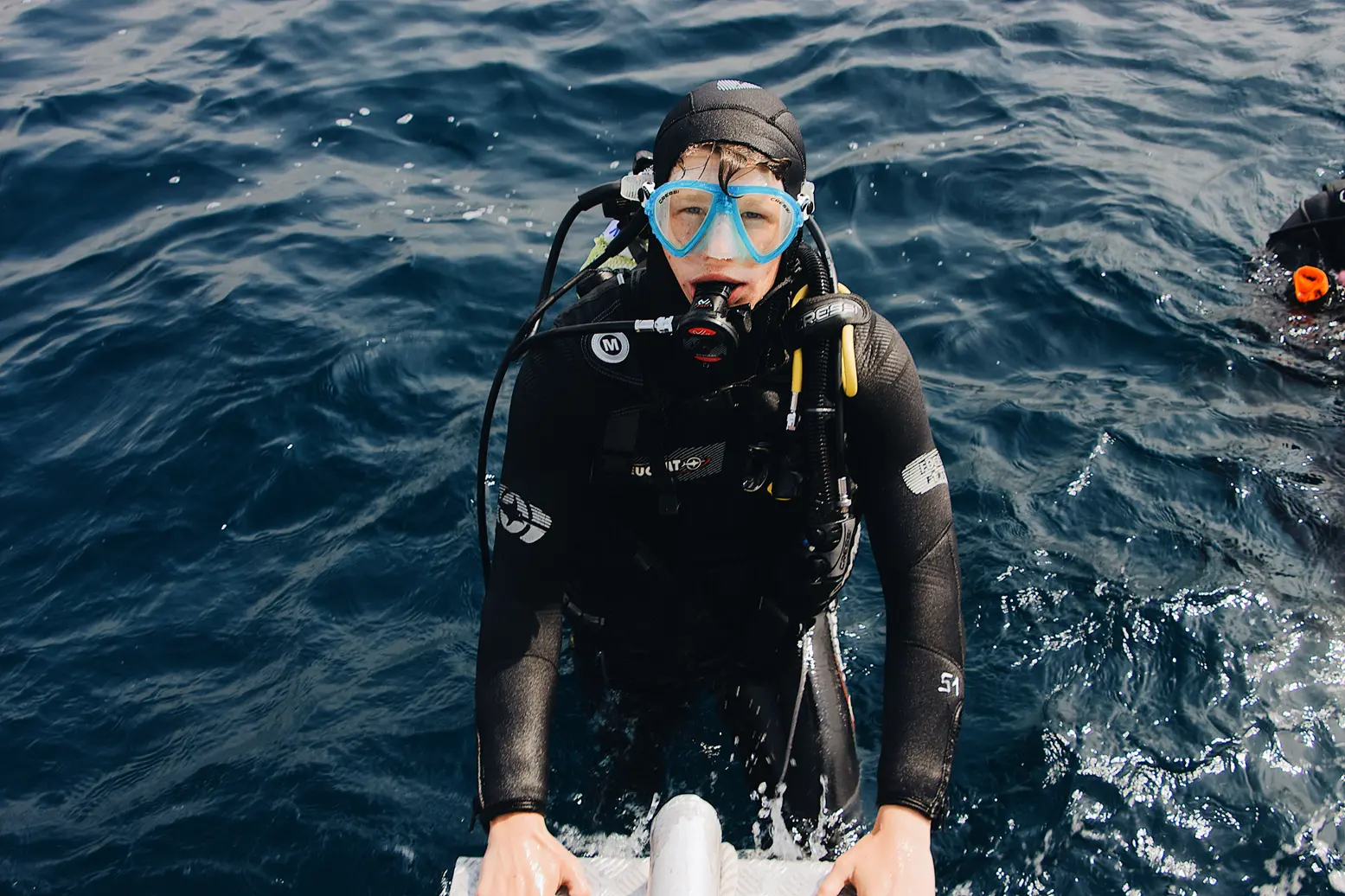
Numbers alone do not capture what Galápagos demands. Dives at Darwin and Wolf often involve **negative entries** from small boats, called pangas, where divers roll backward and descend immediately to avoid being swept off the site. Divers then hold position near the reef in current while watching hammerheads in the blue, and ascend in open water.
Water temperatures fall to about 16 to 21 °C in the cool season, so comfort in a 7 mm wetsuit with a hood, with the extra weight it requires, matters. Divers who have only dived in warm, calm water should gain current and cold-water experience before booking, or consider a day diving week first.
Several operators specifically advise against their trips for divers returning after a long break. A refresher dive or a few local dives before travel make the first days on board safer and more enjoyable.
Insurance and Medical Fitness
Dive accident insurance covering hyperbaric treatment and evacuation is required by some boats and recommended on all. Galápagos is remote, and an evacuation from the northern islands involves a long navigation. Operators also ask divers to complete a medical questionnaire, and some conditions require written clearance from a physician before diving.
Nitrox and Equipment
Nitrox is widely available and helpful at the depths typical of Galápagos, but divers need a nitrox certification to use it. Some boats offer the course on board, which can be completed during the first days of the trip. Prices for both nitrox and the course are compared in our guide to Galápagos liveaboard costs.
Each diver should carry a personal dive computer, a surface marker buoy and an audible signaling device. Some boats add their own safety systems: the Aqua issues a personal marine rescue GPS to every diver, and other boats use electronic diver tracking.
National Park Rules for Divers
All dives in the Galápagos Marine Reserve are led by naturalist dive guides authorized by the national park, and boats in our fleet typically work with groups of six to eight divers per guide. Wildlife may not be touched, chased or fed, visitors keep a distance of about two meters from animals, and fishing is prohibited, with full protection inside the Darwin and Wolf sanctuary.
At the end of a trip, divers should follow standard no-fly guidance, which recommends waiting at least 18 hours after multiple days of diving. Most itineraries schedule the last dive the day before disembarkation for that reason.
Options for Less Experienced Divers
Divers who do not yet meet liveaboard requirements still have options. Day dives from Santa Cruz include easier sites such as North Seymour and Mosquera Islet, while Gordon Rocks offers an advanced day dive for those building experience. Our comparison of liveaboard and day diving explains the trade-offs. Non-divers can see hammerheads from the surface on the Kicker Rock snorkeling tour, covered with other sites in our guide to hammerhead sharks in Galápagos.
Why the Standards Exist
The entry requirements for Galápagos liveaboards can seem strict compared with other dive destinations, but they reflect conditions that are genuinely demanding. Strong currents, cold water, surge and long distances from medical facilities reduce the margin for error, and a single diver struggling in current can affect the safety of an entire group.
The standards also protect the sites. Divers with good buoyancy control and experience in current are less likely to grab rocks, damage the reef or disturb the hammerhead schools by moving erratically. In a marine reserve where shark behavior is part of the attraction, calm and competent divers improve the experience for everyone in the water.
For divers who do not yet meet the requirements, the practical path is to build experience gradually: drift dives, cold-water dives and deeper dives in other destinations, followed by a week of day diving from Santa Cruz, where sites such as Gordon Rocks offer a realistic preview of northern conditions. Arriving at Darwin and Wolf prepared turns a demanding trip into one of the most rewarding dive experiences in the world, rather than a week spent struggling against the conditions.
Frequently Asked Questions About Galápagos Diving Requirements
Do you need Advanced Open Water to dive Galápagos?
Most liveaboards require Advanced Open Water certification or an equivalent. Some day dive sites near Santa Cruz accept Open Water divers, but the northern islands are for advanced divers.
How many logged dives do you need for Darwin and Wolf?
Many operators expect around 50 logged dives, including experience in current. Some boats state the number explicitly, while others assess experience at embarkation.
Is dive insurance mandatory in Galápagos?
Some liveaboards require dive accident insurance before boarding, and all recommend it. Coverage should include hyperbaric treatment and medical evacuation from remote sites.
Can I get nitrox certified on a Galápagos liveaboard?
Some boats offer the nitrox course on board for an additional fee, so divers can complete it during the trip. Confirm availability with the operator before departure.
Can beginner divers dive in Galápagos?
Beginners can dive easier sites near Santa Cruz, such as North Seymour and Mosquera Islet, on day trips. Liveaboards to Darwin and Wolf are not suitable for new divers.
How many divers are there per guide in Galápagos?
Boats typically work with groups of six to eight divers per naturalist dive guide. Smaller groups make it easier for guides to manage entries, current and ascents at demanding sites.