Galápagos is a year-round dive destination, but it does not offer the same experience in every month. Two ocean seasons, one warm and one cool, change water temperature, visibility, sea conditions and the large animals that divers come to see.
The warm season, from December to May, brings calmer seas, warmer water and often better visibility. The cool season, from June to November, brings colder, rougher water rich in plankton, along with whale sharks and, at many sites, larger schools of hammerheads. Neither is better overall. The right choice depends on which species matter most and how much cold water and current a diver is willing to accept.
The two seasons are described below, with the main dive highlights summarized by period of the year.
| Period | Water Temperature | Sea Conditions | Main Highlights |
|---|---|---|---|
| December to February | About 22 to 26 °C | Calmer, visibility often good | Manta and eagle rays, hammerheads, turtles |
| March to May | Up to about 28 °C at times | Calmest of the year | Warmest water, clearest conditions, hammerheads |
| June to August | Cooling toward 18 to 23 °C | Currents and swell increase | Whale sharks arrive, hammerhead schools grow |
| September to November | About 16 to 21 °C, colder at depth | Roughest in August and September | Whale shark peak, mola mola, very active sea lions |
The Ocean Currents Behind the Seasons
Galápagos sits where several ocean currents meet. From about June, the cold Humboldt Current strengthens from the south and the southeast trade winds increase, cooling the surface water and driving upwelling. Nutrients rise toward the surface, plankton blooms and the food web expands, which attracts large filter feeders and predators.
From about December, the Humboldt weakens and warmer water from the north spreads across the archipelago. The sea calms, temperatures rise and visibility often improves. On the western coasts of Isabela and Fernandina, the deep Cromwell Current keeps water cooler than elsewhere throughout the year.
The Warm Season, December to May
Water temperatures of roughly 22 to 26 °C, and sometimes higher in March and April, make a 5 mm wetsuit sufficient for most divers. Seas are generally calmer, surface intervals are more comfortable and crossings between sites are smoother.
Hammerheads remain present, although they may stay deeper. Manta rays and spotted eagle rays are frequently encountered along the walls, and Cabo Marshall on the east coast of Isabela is known for giant mantas. The warm season is also when liveaboards are most likely to schedule a night dive at Wolf, described in our guide to night diving at Wolf Island.
The Cool Season, June to November
Water falls to around 16 to 21 °C at many sites, with colder thermoclines at depth, so a 7 mm wetsuit with a hood is standard. Currents are stronger and the sea rougher, especially in August and September.
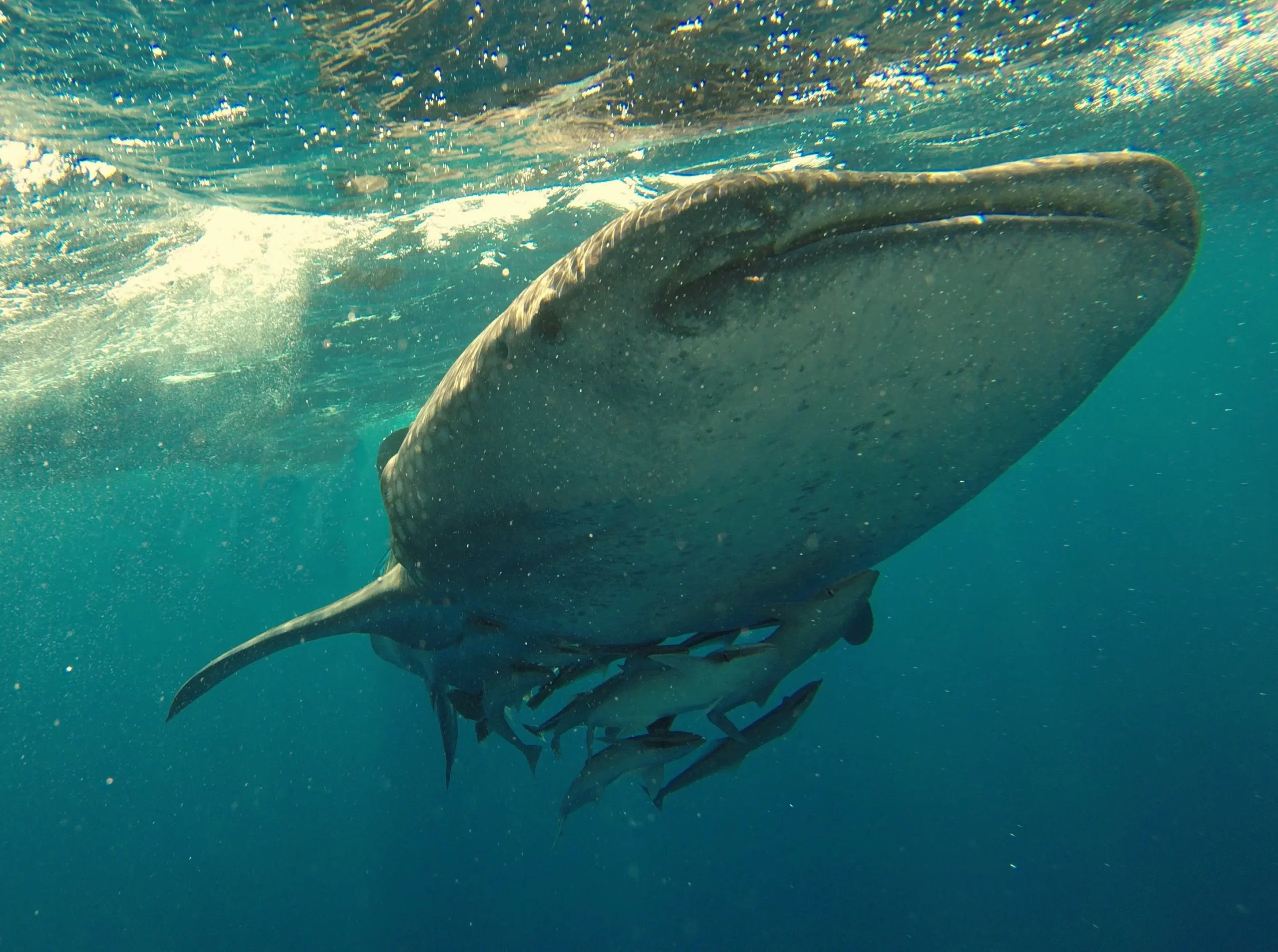
The rewards are significant. Whale sharks, many of them large females, pass Darwin and Wolf mainly from about July to October. Hammerhead schools are often larger, and the ocean sunfish, or mola mola, appears at cold western sites such as Punta Vicente Roca and Cabo Douglas. Sea lions are especially playful as pups learn to swim. Our Darwin and Wolf liveaboard guide describes the northern sites in this season, and our guide to where to see hammerhead sharks covers every hammerhead site in the archipelago.
Demand and Booking
The cool season months of July to October are the busiest for dive cruises, driven by the whale shark season, and the best boats fill up to a year in advance. Warm season departures are generally easier to secure, though the December and January holidays also book early.
Itineraries also shape what you see. The Aqua, for example, adds Cabo Marshall to its Darwin and Wolf route, which raises the chance of mantas. Our guide to Galápagos liveaboard costs compares fares and extras across the fleet, and our diving requirements guide explains the experience needed in strong current and cold water.
Choosing a Season by Priority
Divers focused on whale sharks should choose July to October. Those who prefer warm water, calmer seas and good visibility, with hammerheads and mantas, should choose March to May. Travelers combining diving with land wildlife can use our month by month wildlife calendar to align both.
Two Oceans in One Year
The contrast between the Galápagos seasons is unusually strong for an equatorial destination. In the space of a few months, the same dive site can shift from warm, clear water with rays gliding over the reef to cold, green water filled with plankton and the large animals that feed on it. Divers who return in different seasons often describe the experience as visiting two separate destinations.
That variability is the foundation of the archipelago’s biological richness. The upwelling of the cool season fuels the entire marine food web, from plankton to sardines to sharks, while the warm season allows species from the tropical Pacific to spread across the islands. The overlap of cold and warm water species is what gives Galápagos diving its distinctive mix of penguins, sea lions, reef fish and pelagic giants.
El Niño and La Niña add a further layer of change. Warm El Niño years can reduce plankton, push fish deeper and alter the behavior of sharks, while cold La Niña years intensify upwelling. Checking current ocean conditions before travel is useful, but the two-season pattern remains the most reliable guide for planning.
Frequently Asked Questions About the Best Time to Dive Galápagos
What is the best month to dive in Galápagos?
It depends on priorities. July to October is best for whale sharks and large hammerhead schools, while March to May offers the warmest water, calmest seas and good visibility.
When can you see whale sharks in Galápagos?
Whale sharks are seen mainly around Darwin and Wolf from about July to October, during the cool season. Many of the animals recorded there are large females.
How cold is the water for diving in Galápagos?
Temperatures range from about 16 to 21 °C in the cool season, with colder thermoclines, to about 22 to 26 °C in the warm season and sometimes higher in March and April.
What wetsuit do I need to dive Galápagos?
A 7 mm wetsuit with a hood is recommended from June to November. In the warm season, a 5 mm wetsuit is usually enough for most divers.
Is Galápagos diving good in December?
Yes. December marks the start of the warm season, with calmer seas and warming water. Hammerheads, rays and turtles are all present, though holiday departures book early.
When do Galápagos liveaboards sell out?
Departures from July to October sell out first, often up to a year ahead, because of the whale shark season. The Christmas and New Year holidays also fill early.