Santa Fe is a small, flat island southeast of Santa Cruz and one of the older islands in Galápagos. It has no town, no roads and no permanent residents, but it has species found nowhere else, including its own land iguana, and one of the most playful sea lion colonies in the archipelago.
It is also one of the closest islands to Puerto Ayora, about an hour by boat. That short crossing makes it a favorite for travelers who want a relaxed snorkeling day without the long rides of Floreana or Bartolomé. This guide explains what lives on Santa Fe, how the day tour works and how it compares with other options.
| Feature | Details |
|---|---|
| Location | About an hour by boat southeast of Puerto Ayora |
| Main visitor area | Barrington Bay, on the northeast coast |
| Endemic species | Santa Fe land iguana and Santa Fe rice rat |
| Day tour focus | Snorkeling in the bay, no landing on the island |
| Typical wildlife in the water | Sea lions, sea turtles, white-tip reef sharks, reef fish |
Wildlife Found Only on Santa Fe
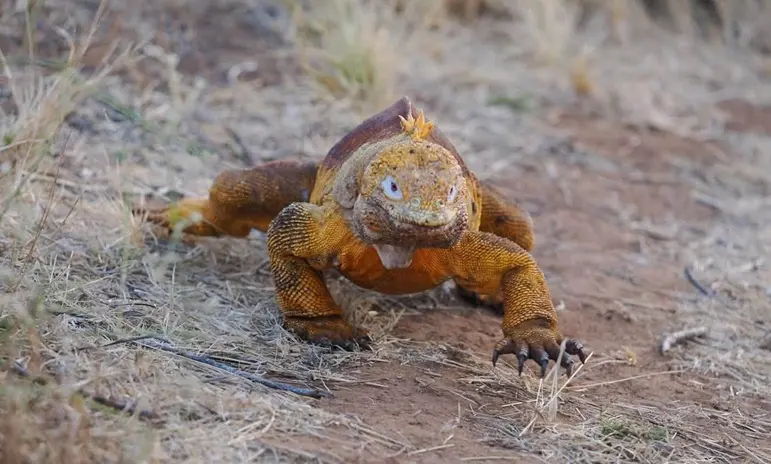
The Santa Fe land iguana is a separate species from the land iguanas of other islands, paler and with a longer snout, and it lives nowhere else on Earth. The island also has its own rice rat, one of the few native rodents in Galápagos. Goats introduced to Santa Fe were removed in the early 1970s, and black rats never became established, which helped both species survive.
The landscape is dominated by a forest of giant prickly pear cactus, some taller than a house, which feeds the iguanas with its fallen pads and fruit. These species are best seen on the island trail, which is visited by cruises with the right permit.
Snorkeling in Barrington Bay
The day tour focuses on the water. Barrington Bay, a sheltered turquoise anchorage, holds a large sea lion colony, and young sea lions often swim straight up to snorkelers, twisting and blowing bubbles. Sea turtles feed on the algae in the shallows, and white-tip reef sharks rest on the sandy bottom.
Above the water, frigatebirds, swallow-tailed gulls and blue-footed boobies nest on the cliffs. Good visibility and calm water make the bay suitable for beginners, as long as they can swim. Our guide to the best snorkeling tours in Galápagos ranks Santa Fe among the easiest snorkeling days in the islands.
How the Santa Fe Day Tour Works
The Santa Fe snorkeling tour leaves Puerto Ayora in the morning, cruises along the island’s rocky coast and spends most of the day snorkeling in Barrington Bay. On the way back, boats often stop at Playa Escondida on the coast of Santa Cruz, weather permitting, with lunch on board. The tour returns to town in the early afternoon.
The tour does not land on Santa Fe. The island trail requires a different permit and is part of cruise itineraries, so the land iguanas are not guaranteed from the boat. Travelers set on seeing them on land should choose a cruise route that includes Santa Fe.
Santa Fe or Pinzón?
Both islands offer snorkeling trips from Puerto Ayora at similar prices. Santa Fe is closer and calmer, with the most interactive sea lions. The Pinzón snorkeling tour has two snorkeling stops and more chances of sharks and rays in deeper water. Our comparison of the best Galápagos day tours places both trips alongside the others available from Santa Cruz.
A Gentle Introduction to Galápagos Waters
Santa Fe works well as the first boat trip of a stay. The crossing is short, the bay is protected and the sea lions give newcomers an unforgettable first swim. Families with children who swim confidently and travelers who feel nervous about open water often find it easier than the longer trips.
It also fits neatly into a busy schedule. Returning to Puerto Ayora in the early afternoon leaves time for Las Grietas, the Charles Darwin Research Station or a walk to Tortuga Bay on the same day. Our guide to things to do on Santa Cruz lists the best ways to fill those afternoons.
Santa Fe also tells one of the quieter success stories of the islands. Without the introduced animals that damaged other islands, its iguanas and rice rats persisted, and its cactus forest still stands. Snorkeling in its bay is a reminder of what Galápagos looks like when it is left alone, which is the whole point of protecting it. Bring a rash guard or a short wetsuit between June and November, when the water around Santa Fe is noticeably cooler.
Frequently Asked Questions About Santa Fe Island
Can you land on Santa Fe Island on a day tour?
No. Day tours from Puerto Ayora snorkel in Barrington Bay without landing. The island trail is visited by cruises with the right permit.
How far is Santa Fe from Santa Cruz?
About an hour by boat from Puerto Ayora, one of the shortest crossings for a day trip.
What can you see snorkeling at Santa Fe?
Young sea lions, sea turtles, white-tip reef sharks and many reef fish, usually in calm and clear water.
Is Santa Fe good for beginners?
Yes. The bay is sheltered and calm, which suits beginners and families, as long as everyone can swim.
What is special about the Santa Fe land iguana?
It is a separate species found only on Santa Fe, paler than other land iguanas and adapted to the island’s cactus forest.
Is Santa Fe or Pinzón better for snorkeling?
Santa Fe is calmer and best for sea lions. Pinzón has two stops and more chances of sharks and rays in deeper water.