Richard Mariño, Galápagos travel writer
MEET OUR CONTRIBUTOR

Richard Mariño

Galápagos Travel Writer & Destination Specialist

The Galápagos Islands are more than a destination to me. They are a place I know, appreciate, and enjoy sharing with travelers from around the world. My work focuses on helping visitors experience the archipelago through daily excursions, discovering its remarkable wildlife, volcanic landscapes, and unique island environments.

Through Touring Alapagos, I share practical travel information and insights about exploring Santa Cruz, Isabela, and San Cristóbal. From choosing the right excursions to understanding what makes each island special, my goal is to make planning a Galápagos trip easier and more rewarding.

I believe the best way to experience these islands is to discover each destination, appreciate its natural beauty, and connect with the extraordinary wildlife that makes the Galápagos unique.

Galápagos Wildlife Daily Excursions Island Destinations Responsible Tourism
Articles by Richard Mariño

Travel guides, destination insights and practical advice for exploring the Galápagos Islands.

Darwin & Wolf Liveaboard Diving: Galapagos Far North

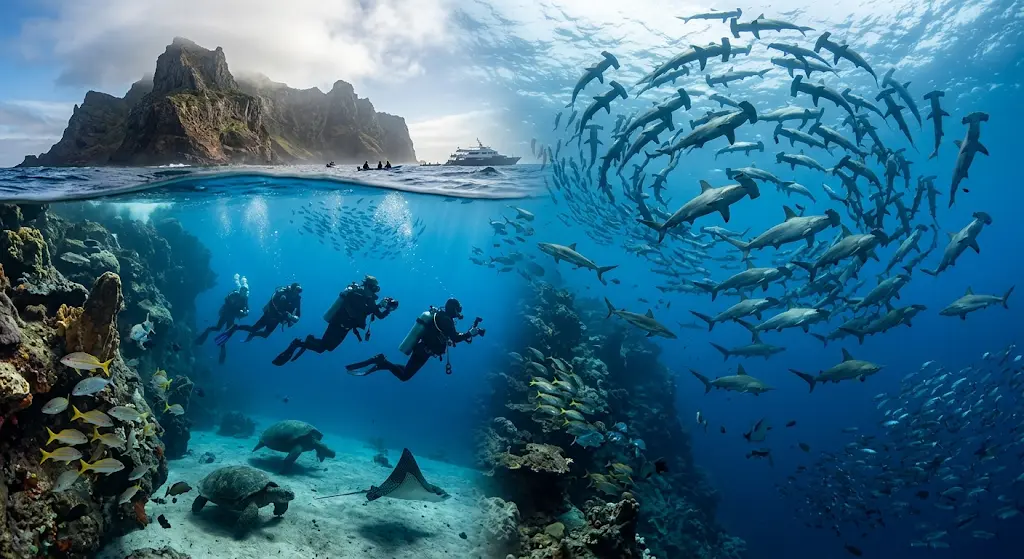
Scuba divers exploring a deep reef next to a massive school of hammerhead sharks at Darwin and Wolf Islands in Galapagos.

Darwin and Wolf lie roughly 100 nautical miles northwest of the main Galápagos group, separated from Isabela and Fernandina by an open stretch of Pacific that takes most vessels between 14 and 16 hours to cross. Neither island permits landings. There are no trails, no visitor sites and no day tours — the only lawful … Read more

Can You See Whales in Galapagos in September?

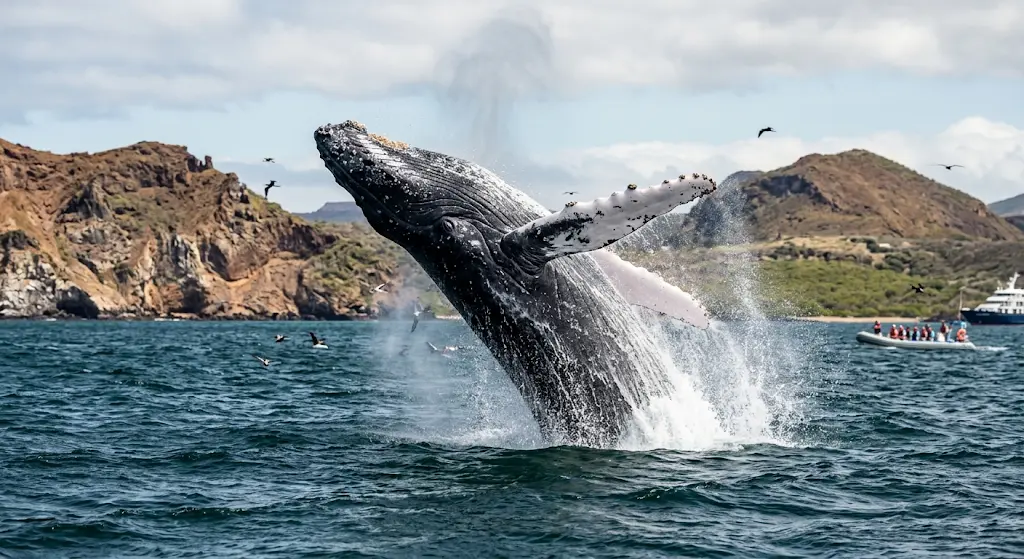
Humpback whale breaching out of the water in the Galapagos Islands with a volcanic landscape in the background

Yes — September falls inside the most productive stretch of the Galápagos cetacean calendar, though the species you are most likely to encounter are not the ones most visitors expect. The archipelago sits at the convergence of three major ocean currents, and by September the cold, nutrient-dense Humboldt Current and the subsurface Cromwell Current are … Read more