
The blue-footed booby is one of the most recognizable birds in Galápagos and one of the easiest to watch at close range. It nests on open ground, shows little fear of people and performs a courtship display that has become a symbol of the islands.
Seeing one in flight is almost guaranteed on any boat trip, since boobies fish along the coasts of every island. Watching a nesting colony, with courtship, eggs and chicks, requires visiting specific sites. This guide lists the most reliable places to see blue-footed boobies, explains their behavior and identifies the day tours that reach each colony.
| Site | Base Island | What You See | How to Get There |
|---|---|---|---|
| North Seymour | Santa Cruz | Nests and courtship beside the trail | North Seymour day tour |
| Punta Suárez, Española | San Cristóbal | Nesting colony beside Nazca boobies | Española day tour |
| Isla Lobos | San Cristóbal | Nesting birds on lava | Isla Lobos half-day tour |
| Punta Pitt | San Cristóbal | Blue-footed, Nazca and red-footed boobies | 360° San Cristóbal tour |
| Los Túneles | Isabela | Nests on the lava bridges | Los Túneles tour |
| La Fe, Santa Cruz | Santa Cruz | Nesting near the shore | Pinzón snorkeling tour |
How to Recognize a Blue-Footed Booby
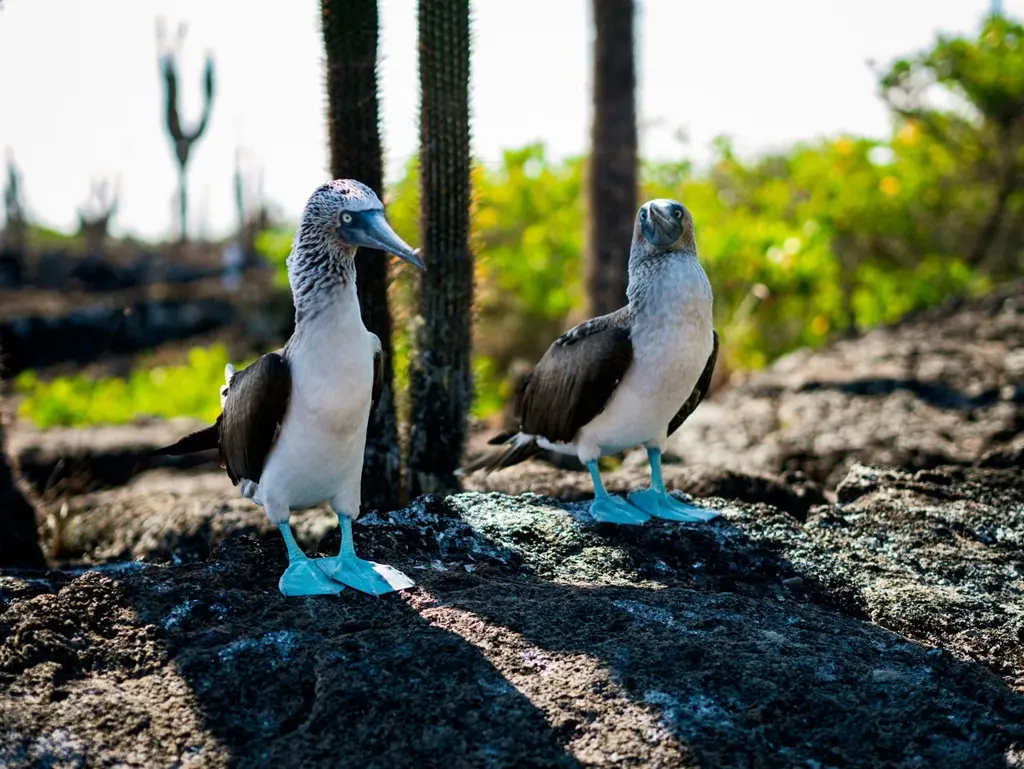
Galápagos holds the subspecies Sula nebouxii excisa. Adults are brown and white with turquoise to bright blue feet, a color produced by carotenoid pigments obtained from fresh fish. Brighter feet signal a well-fed bird in good condition, and females use foot color when choosing a mate.
The sexes are easy to tell apart at close range. Females are larger and appear to have bigger pupils, an effect created by a ring of dark pigment around the iris. Males whistle, while females make a lower, honking call.
Courtship and Nesting Behavior
The courtship display is the reason most visitors seek out a colony. The male parades in front of the female, lifting each foot slowly and deliberately to show its color. Both birds then perform sky-pointing, raising the bill skyward with wings tilted and tail cocked, and the male may present small twigs or pebbles.
Nests are simple scrapes on bare ground, often ringed by a circle of guano. Females lay one to three eggs several days apart, so chicks hatch at different times. In years of plentiful food, all chicks can survive; in lean years, the oldest chick usually outcompetes the others.
Breeding is not tied to a single season. Colonies respond to food availability, so courtship, eggs and chicks can be seen in different months at different sites. Displays are frequent around May, but active nesting occurs through much of the year.
The Best Sites on Day Tours
North Seymour is the most accessible colony from Santa Cruz. Its flat, uplifted terrain places nests within a few steps of the trail, and boobies dance in front of passing groups. The North Seymour day tour combines the colony with frigatebirds and an afternoon snorkel. Our comparison of Bartolomé and North Seymour explains how it differs from the other flagship Santa Cruz tour.
Española hosts boobies alongside Nazca boobies and the waved albatross. The Española day tour from San Cristóbal reaches Punta Suárez, where nests line the rocky loop. Our guide to the Española day trip and albatross season covers timing.
Isla Lobos, half an hour from Puerto Baquerizo Moreno, offers nesting boobies on a short lava walk. The Isla Lobos tour is the easiest option on San Cristóbal and suits families.
On Isabela, boobies nest on the lava bridges at Los Túneles, where the walk follows the snorkel. The Los Túneles tour combines nesting birds with seahorses and turtles in the same morning.
Watching Boobies Fish
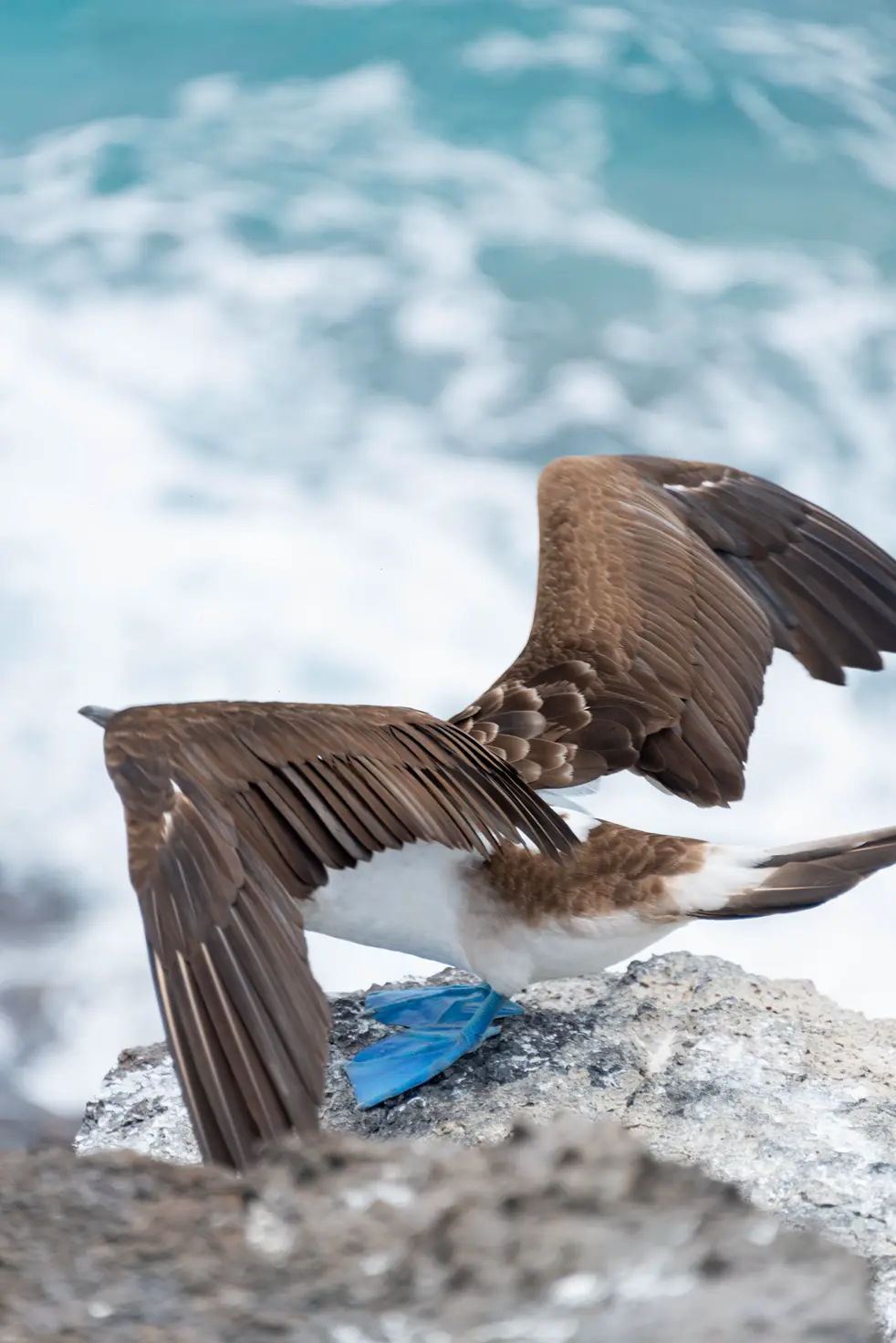
Away from the colonies, the most spectacular behavior is feeding. Blue-footed boobies plunge-dive from height, folding their wings just before impact and entering the water like darts. Groups often dive together over schools of sardines, and the sight is common from day boats and ferries in coastal waters.
A Population Under Pressure
Local residents and researchers noticed fewer blue-footed boobies in the early 2010s. A two-year study completed in 2014, led by scientists from Wake Forest University with Ecuadorian partners and the Galápagos National Park, found very little breeding activity and an aging adult population. The research linked the decline to a fall in sardines, the boobies’ main food. Our guide to Galápagos animals places the species within the wider seabird community.
What Boobies Reveal About the Ocean
Blue-footed boobies are often treated as a photogenic curiosity, but their real significance is ecological. As specialist predators of small schooling fish, they respond quickly to changes in the ocean. When sardines are abundant, colonies fill with displaying pairs and growing chicks. When sardines decline, breeding slows or stops altogether, and adults may skip a season entirely rather than raise chicks they cannot feed.
That sensitivity makes the species an effective indicator of marine conditions around the archipelago. The decline documented in the 2010s did not come from direct human disturbance at the nesting sites, which are well protected by the national park. It reflected changes in the food supply offshore, a reminder that the health of Galápagos wildlife depends on processes far beyond the visitor trails.
For travelers, the practical conclusion is to treat any active colony as a privilege rather than a guarantee. Sites such as North Seymour, Española and Isla Lobos still offer close views of courtship and nesting, but numbers vary from year to year. Watching the birds quietly, at the distance guides indicate, helps ensure that disturbance never adds to the pressures they already face.
Frequently Asked Questions About Blue-Footed Boobies
Where is the best place to see blue-footed boobies in Galápagos?
North Seymour, reached on a day tour from Santa Cruz, offers the closest views of nesting and courtship. Española, Isla Lobos and Punta Pitt on San Cristóbal are also reliable.
When do blue-footed boobies do their mating dance?
Courtship can happen in many months because breeding follows food availability. Displays are frequent around May, but visitors see dancing pairs at active colonies through much of the year.
Why are blue-footed boobies’ feet blue?
The color comes from carotenoid pigments in the fresh fish they eat. Brighter feet indicate a healthy, well-fed bird, and females prefer males with the brightest feet.
How can you tell male and female blue-footed boobies apart?
Females are larger and appear to have bigger pupils because of a dark ring around the iris. Males whistle, while females make a deeper honking call.
Are blue-footed boobies endangered?
The species is not globally endangered, but the Galápagos population declined in the early 2010s. Research linked the drop to fewer sardines, the birds’ main prey.
Can you see blue-footed boobies on Isabela?
Yes. They nest on the lava bridges at Los Túneles and are often seen fishing around Puerto Villamil and Las Tintoreras.