
Most Galápagos day tours involve open water, and the boats that run them are fast and light. On a calm morning the ride is easy. On a windy afternoon in September, a two-hour crossing to Floreana or Española can be the hardest part of the trip for anyone prone to motion sickness.
The good news is that seasickness is largely predictable. It depends on three things travelers can control: the length of the crossing, the time of year and the time of day. Choosing tours with short or sheltered navigation, and scheduling the longer ones for calmer months, removes most of the risk.
The ranking below orders our day tours by sea exposure, followed by practical preparation for the crossings that cannot be avoided.
| Day Tour | Time on Open Water | Sea Exposure |
|---|---|---|
| Sierra Negra trek | None, land only | Very low |
| Las Tintoreras | About 15 minutes across the bay | Very low |
| Tintoreras kayak | Sheltered bay, no crossing | Very low |
| Isla Lobos | About 30 minutes each way | Low |
| North Seymour | About 45 minutes each way | Low to moderate |
| Santa Fe | About 1 hour each way | Moderate |
| Los Túneles | About 1 hour each way | Moderate |
| Bartolomé | About 2 hours each way | Moderate to high |
| Floreana snorkeling | About 1.5 hours or more each way | High |
| Española | About 2 hours each way | High |
| Floreana land tour | About 2.5 hours each way | High |
| 360° San Cristóbal | Most of 8 hours on board | High |
Why Galápagos Crossings Feel Rough
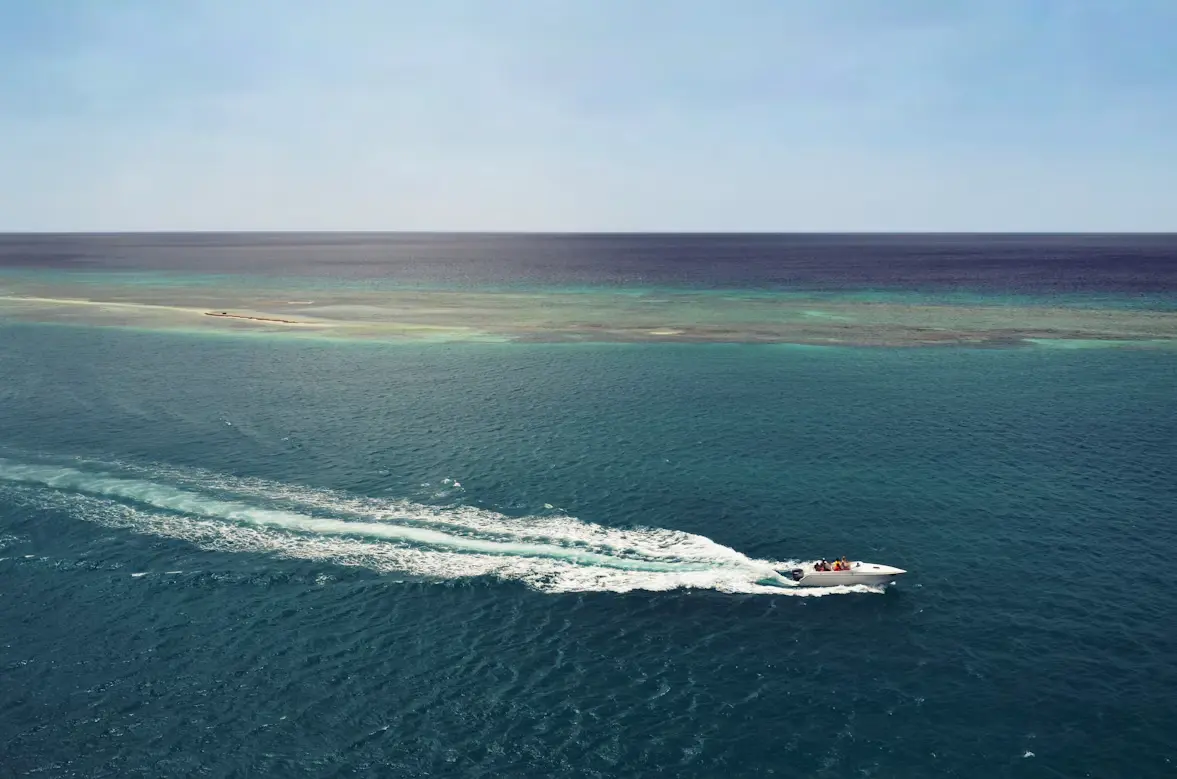
Day boats in Galápagos are mostly fiberglass speedboats built to cover distance quickly. At speed they ride over the swell rather than through it, which produces a repeated lifting and slamming motion that differs from the slow roll of a large cruise ship.
The archipelago also sits in open Pacific water with few natural barriers between islands. Swell generated far to the south arrives with little to stop it, and wind can build quickly in the afternoon. Sheltered bays such as Puerto Villamil on Isabela are the exception, which is why the Isabela tours rank lowest for exposure.
The Calmest Day Tours to Choose
The Sierra Negra volcano trek involves no boat at all. It is a 16 km hike along the rim of a vast caldera and across the lava fields of Volcán Chico, and it suits anyone who wants a full excursion with zero time at sea.
Las Tintoreras is the calmest boat-based option. The ride from the Puerto Villamil pier takes about 15 minutes inside the bay, followed by a walk on a lava trail and a snorkel in a protected cove where penguins and whitetip reef sharks are common. The Tintoreras kayak tour stays inside the same sheltered bay and needs no prior paddling experience.
On San Cristóbal, Isla Lobos involves a crossing of about 30 minutes, and on Santa Cruz, North Seymour combines a 40 minute drive with a crossing of about 45 minutes. Both suit travelers with mild sensitivity.
Tours That Need More Preparation
The longest routes cross open water for up to two and a half hours each way. The Floreana land tour spends about five hours in total on the boat, and the Española and Bartolomé tours each involve around two hours per direction. The 360° San Cristóbal tour keeps passengers on board for most of an eight-hour circumnavigation.
These are some of the most rewarding tours in the islands, so avoiding them entirely is rarely the best answer. Scheduling them for calmer months, and pairing each one with an easy day before and after, makes them manageable. Our comparison of Los Túneles and Las Tintoreras explains the trade-off on Isabela in more detail.
The Calmest and Roughest Months
Sea conditions follow the two Galápagos seasons. During the warm season, from December to May, seas are generally calmer, with February to April usually the flattest. During the cool season, from June to November, the southeast trade winds strengthen and swell increases, with August and September typically the roughest months for small boats.
Time of day matters too. Morning departures are usually smoother than afternoon ones, because wind tends to build after midday. The same pattern applies to the inter-island ferries used in our 7 day island hopping itinerary.
Practical Ways to Prepare
Sit at the back of the boat, near the centre line, where movement is lowest. The bow rises and falls the most on a speedboat. Keep your eyes on the horizon, stay in fresh air and avoid reading or looking at a phone during the crossing.
Eat a light breakfast rather than skipping it, and avoid alcohol the night before. Travelers who know they are sensitive can ask a pharmacist or doctor about motion sickness remedies before the trip; several of our tour pages suggest taking any medication about 30 minutes before boarding. Families should also read our guide to Galápagos day tours for families with kids, since children often feel the motion first.
Planning Around the Sea
Seasickness shapes more Galápagos trips than most travel guides admit. The same crossings that connect the islands also define how comfortable a day feels, and a single rough morning can affect the rest of a holiday. Travelers rarely regret a calmer itinerary, but many regret a week with three long crossings in a row. Treating sea exposure as a planning factor, alongside wildlife and cost, leads to better decisions about which tours to book and when.
The archipelago rewards that approach. Isabela in particular offers a full set of experiences with minimal time at sea: volcano hiking, snorkeling with penguins and sharks, and kayaking among sea lions, all within the sheltered bay of Puerto Villamil or on land. Travelers who are highly sensitive can build an entire stay around those options and still see a wide range of wildlife.
For everyone else, the key variables are season and sequence. Placing long crossings in the calmer warm season months, booking morning departures and leaving rest days between the longest routes reduces discomfort without giving up the islands that make the trip worthwhile.
Frequently Asked Questions About Seasickness on Galápagos Day Tours
Which Galápagos day tour is best for people who get seasick?
The Sierra Negra trek on Isabela involves no boat, and Las Tintoreras involves only a short ride inside a sheltered bay. Both are good choices for travelers who are highly sensitive to motion.
What is the roughest month for boats in Galápagos?
August and September are usually the roughest months, during the cool season, when trade winds and southern swell are strongest. Seas are generally calmest from February to April.
Are morning or afternoon boats calmer?
Morning departures are usually calmer, because wind tends to increase after midday. When a tour offers two departure times, the earlier one is generally the smoother option.
Where should I sit on a speedboat to avoid seasickness?
Sit at the back of the boat, close to the centre, where the up and down motion is smallest. The bow moves the most, especially when the boat is travelling fast.
Are Galápagos cruises better than day tours for seasickness?
Larger cruise vessels handle swell differently and usually navigate at night, but they still move, especially on open-water passages. Some travelers find a stable hotel bed and short day trips easier.
Should I take motion sickness medication before a Galápagos tour?
That is a decision to make with a pharmacist or doctor, who can advise on suitable options. If you use medication, several tour operators suggest taking it about 30 minutes before boarding.