Monique
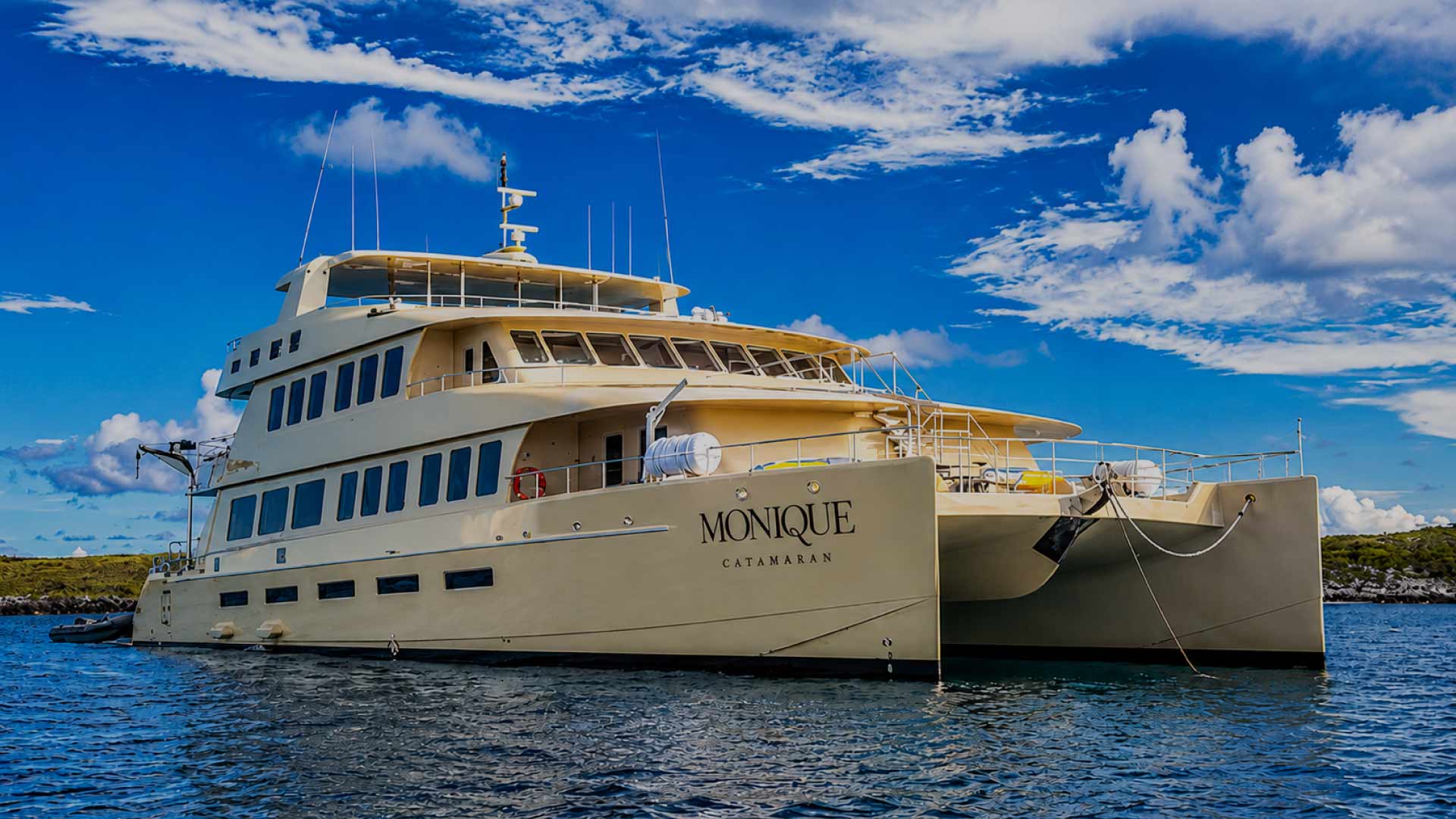
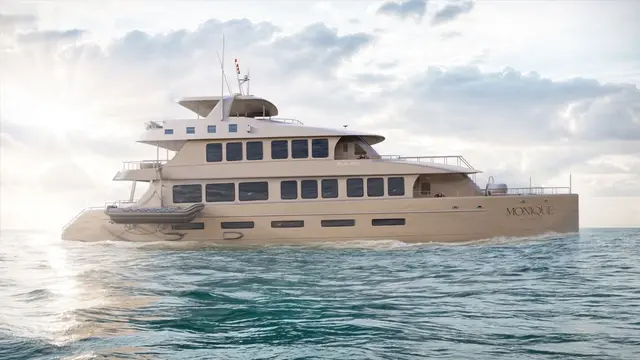
A catamaran launched in 2026 for sixteen guests, with close to one crew member each, three decks of panoramic space and twenty solar panels doing the quiet work.
Almost one to one
Sixteen guests and a crew nearly the same size. Nothing about the day feels queued.
A catamaran
Thirteen metres of beam. Two hulls move differently from one, and most people feel it at anchor.
Solar
Twenty panels and five lithium batteries, plus carbon footprint compensation on every booking.
New, wide and quiet
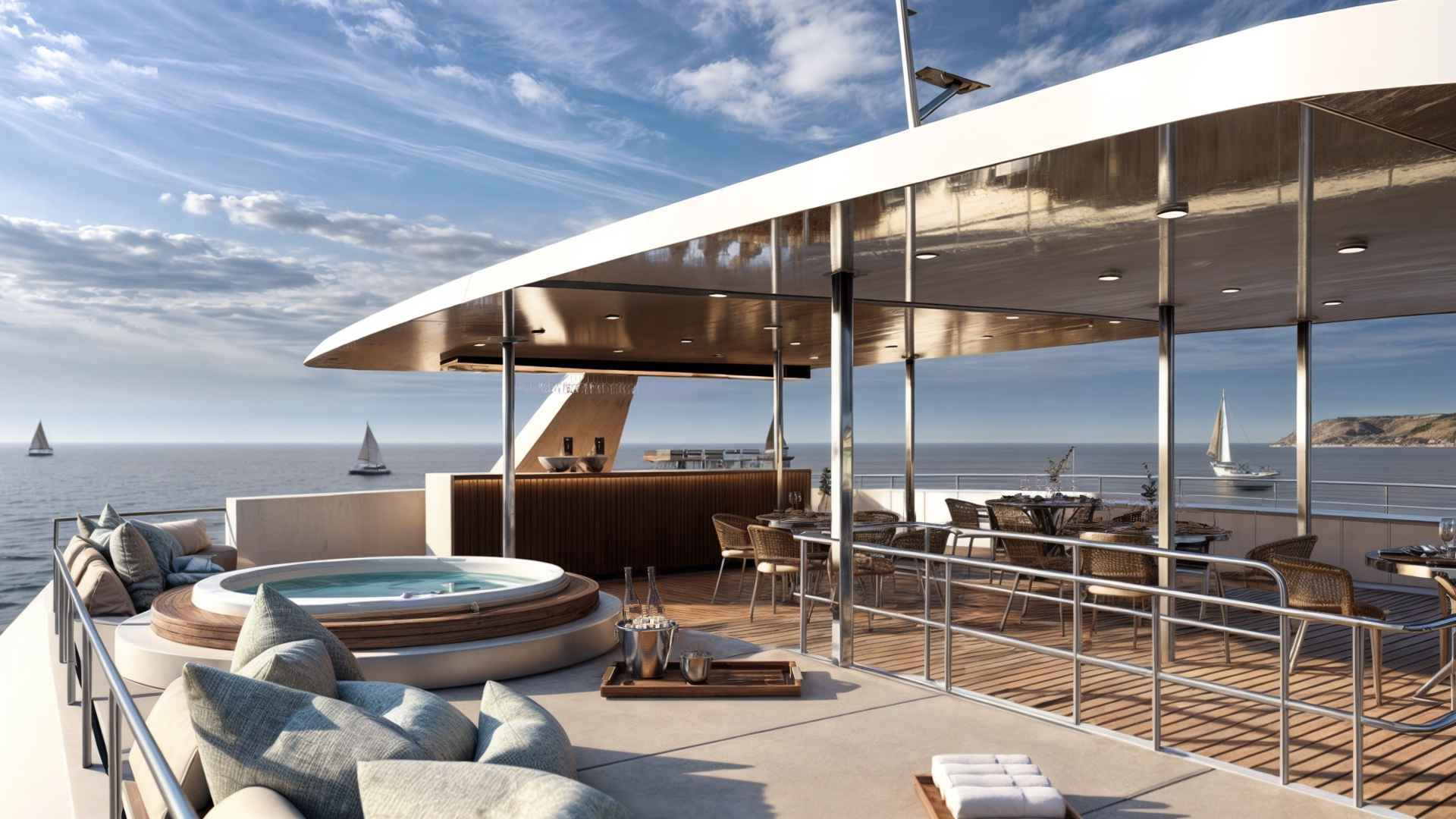
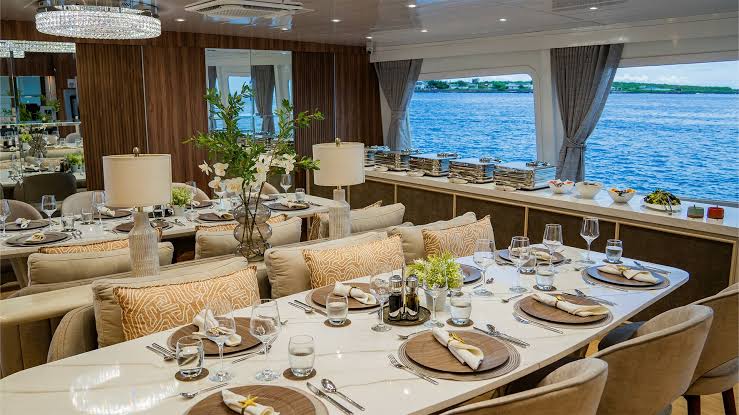
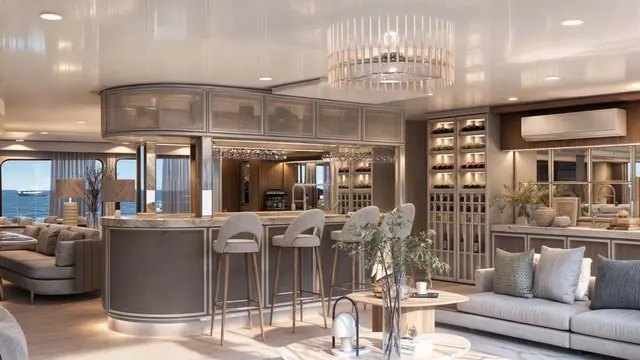
Monique started sailing in 2026, which makes her one of the newest hulls working the islands. Thirty-four metres long and almost thirteen wide: the beam is what you notice first, because a catamaran distributes its space sideways instead of stacking it. Three decks of guest areas, panoramic windows in the living and dining rooms, and a jacuzzi on the sun deck.
Sixteen guests, and a crew close to the same number. That ratio is what separates a good naturalist cruise from a great one: shorter waits at the panga, more attention on the trail, and a galley that can actually cook to order. Twenty solar panels and five lithium batteries carry a real share of the load, and every booking includes carbon footprint compensation.
At a glance
The western route, day by day
Arrival and Las Bachas
Met at Baltra and taken to the boat, then a first afternoon on the white sand at Las Bachas: an easy walk, gentle snorkeling, sea turtles, and what the war left behind.
Red sand and mangrove channels
Rabida’s red beach, cactus groves, pelicans and flamingos in the morning. In the afternoon, Punta Albemarle: mangrove channels, an abandoned radar base, marine iguanas and flightless cormorants.
Vicente Roca and Tagus Cove
Snorkeling in the cold, nutrient-heavy water at Vicente Roca, where whales and dolphins turn up. Then a dinghy ride under the cliffs at Tagus Cove and the walk up to Darwin Lake.
Espinoza Point and Urbina Bay
Lava fields and the biggest marine iguana colonies in the archipelago, with penguins and cormorants alongside. Urbina Bay in the afternoon: uplifted coral, land iguanas and giant tortoises.
Puerto Egas and Buccaneer Cove
Black sand, tidal pools and fur seals in the morning. In the afternoon, the eroded cliffs of Buccaneer Cove by dinghy or kayak, where turtles and sea lions nest.
Pinnacle Rock and Sullivan Bay
The climb to the summit for the view everyone photographs, then snorkeling with reef sharks, penguins and eagle rays. Sullivan Bay after lunch, with green turtles in the shallows.
North Seymour and Mosquera
Blue-footed boobies, swallow-tailed gulls and frigatebirds with their throat pouches inflated. Then Mosquera Islet: sea lions, shorebirds, Sally Lightfoot crabs and reef snorkeling.
Charles Darwin Station and farewell
The Fausto Llerena breeding centre, the museum and the tortoise facility, then the transfer to Baltra and the flight to the mainland.
Landing sites are set by the National Park and can shift with conditions or park scheduling. The guide adjusts the day; the islands do not take requests.
Four ways to sail her
- A — 8 days, Thursday to Thursday. The western route above: Isabela, Fernandina, Santiago and Bartholomew.
- B — 8 days, Thursday to Thursday. The southern and eastern islands: Floreana, Espanola, San Cristobal, Santa Fe and Genovesa.
- C — 4 days, Thursday to Sunday. Santa Cruz highlands, Floreana, Espanola and Kicker Rock.
- D — 5 days, Sunday to Thursday. San Cristobal, Santa Fe, South Plaza, Genovesa and Santa Cruz.
- Departures leave on Thursdays and Sundays, so the two eight-day routes can be combined into a longer trip.
If you have never been, itinerary B covers more of the classic wildlife: the waved albatross on Espanola, the red-footed boobies on Genovesa. Route A is the volcanic one, and the better choice for snorkeling in cold water. Ask us and we will tell you which one suits the week you have.
What the price covers
Included
- All meals on board, with regional and international cooking
- Every excursion on the itinerary
- Bilingual National Park naturalist guides
- All transfers within the islands
- Use of expedition gear, including snorkel equipment and kayaks
- Carbon footprint compensation
Not included
- National Park entrance fee and transit control card
- Flights to and from the Galapagos
- Travel and cancellation insurance
- Bar drinks and personal expenses
- Gratuities for the guides and crew
- Wetsuit rental, if you feel the cold
Write to us before you book the flights: the arrival airport changes with the route — Baltra for A, B and C, San Cristobal for D — and the return is not always the same island you flew into.
Where you sleep
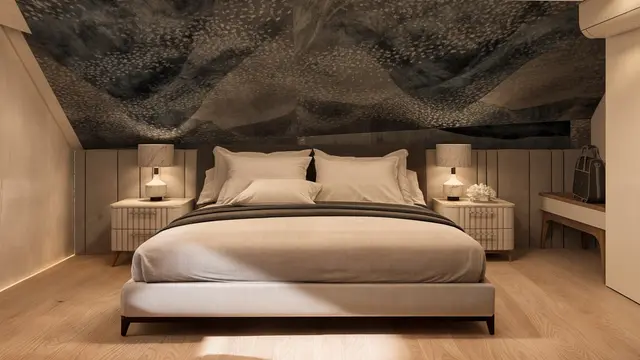
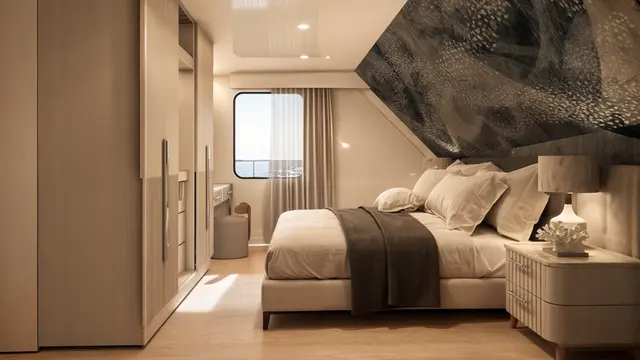
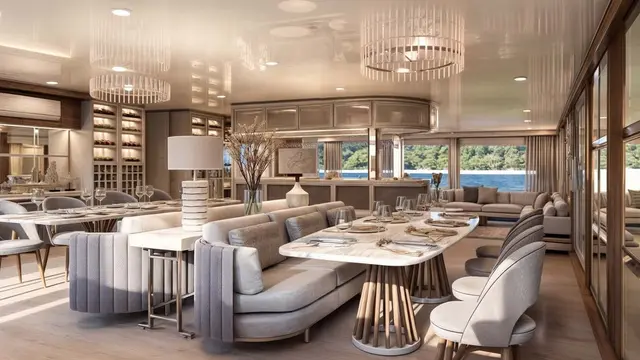
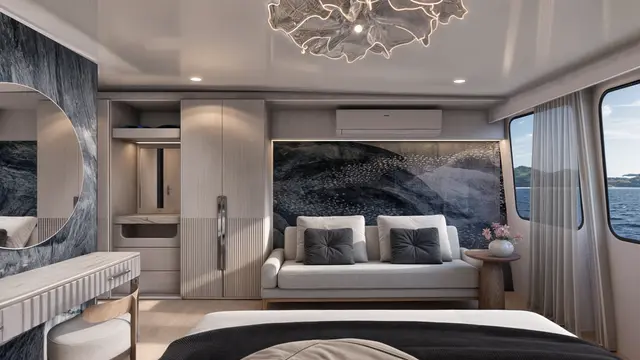
Cabins for sixteen guests across three decks, with the panoramic windows that come with a hull this wide. The living and dining rooms look out at the same water you spent the morning in, and the sun deck holds the jacuzzi and the shaded space for the hours between landings.
Meals on board
Regional and international cooking, served in a dining room with panoramic windows. With sixteen guests and a crew nearly as large, the galley can work to order rather than to a fixed buffet. Dietary needs are easier to handle if you tell us before you sail.
Is this your boat?
Book it if
- You want the newest hull in the islands and are willing to pay for it
- Stability at anchor matters — a catamaran moves less than a monohull
- You are travelling solo and want a boat that suits that
- Walking, snorkeling and kayaking is the trip you have in mind
Choose another cruise if
- You came to dive — this is a naturalist cruise, not a dive boat
- Your budget stops well short of seven thousand five hundred
- You want a fixed date and cannot work around Thursday and Sunday departures
- Long walks on uneven lava are not for you — several sites are rated moderate
Came for the sharks instead? Look at our Galapagos diving cruises, built around Wolf and Darwin.
Tell us your dates
Departures leave on Thursdays and Sundays. Send the week you have in mind and we come back with which route is sailing, the cabins still open on the Monique, and what it costs.