Calipso
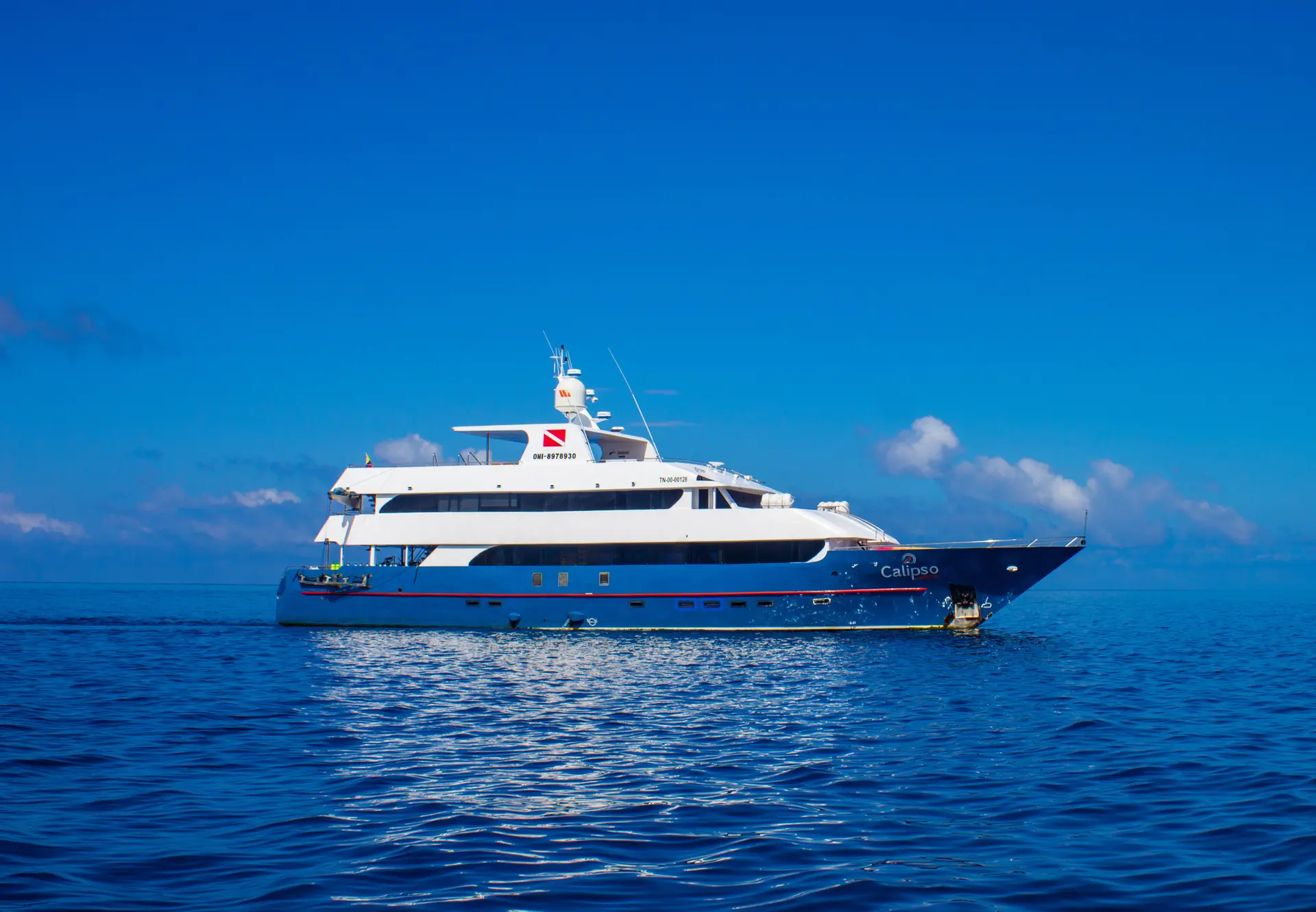
A 117-foot yacht rebuilt for diving in 2018–19, running Darwin and Wolf with eleven crew, two bilingual instructors and a safety inventory most boats do not carry.
Rebuild
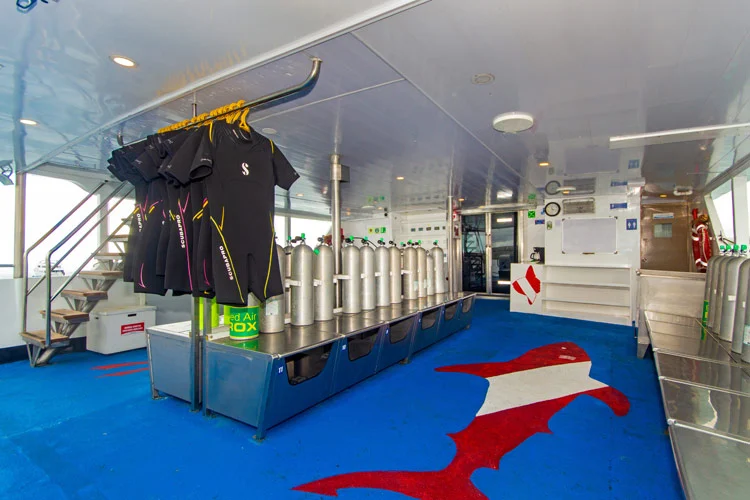
A 1991 hull taken apart and rebuilt in 2018–19 as a first-class dive yacht — not a repaint.
Crew
Eleven crew and two bilingual instructors for sixteen guests. Nobody waits at the ladder.
Safety kit
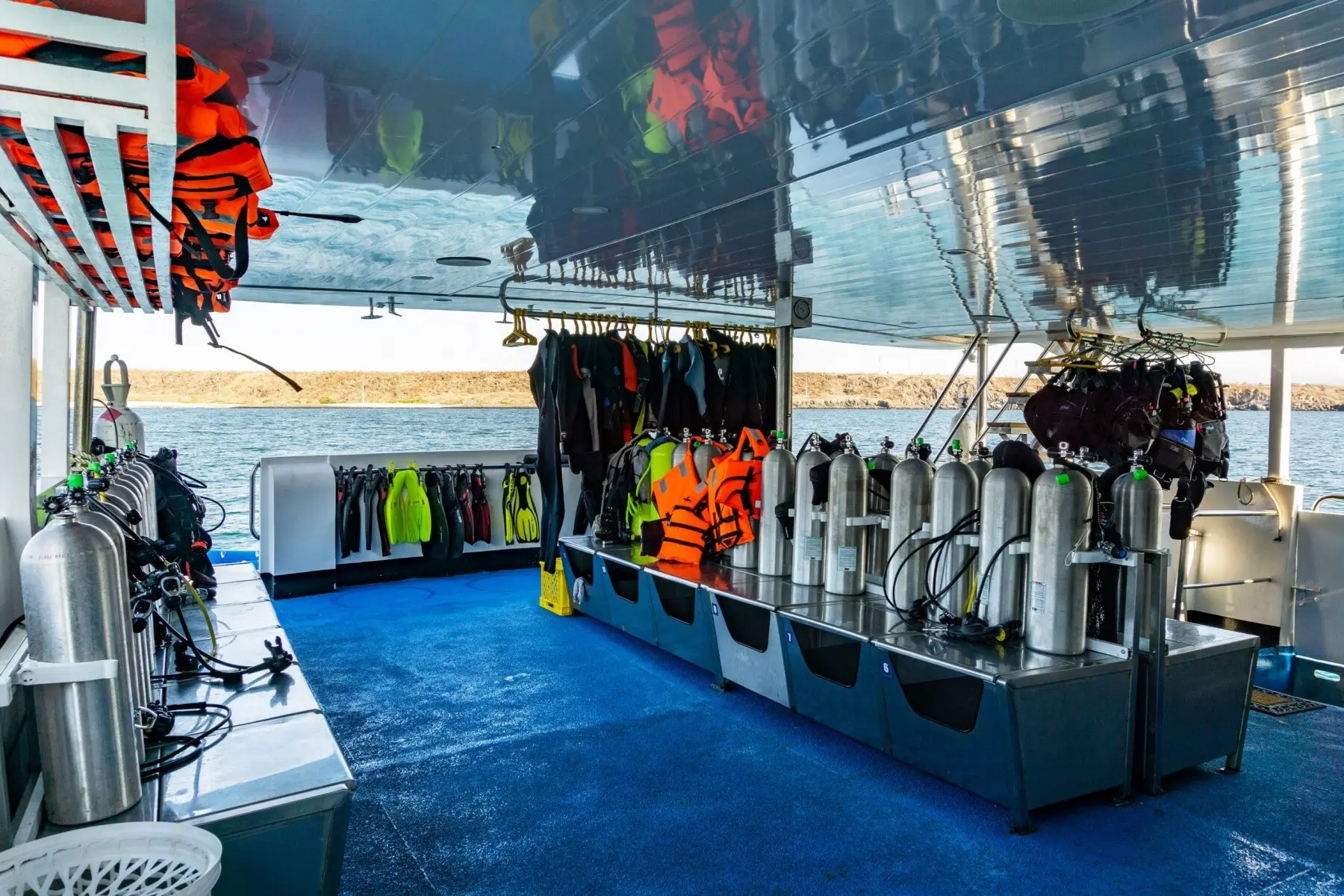
Oxygen in every panga, AED, Nautilus Lifelines, dive alerts and SMBs as standard.
Rebuilt for the north
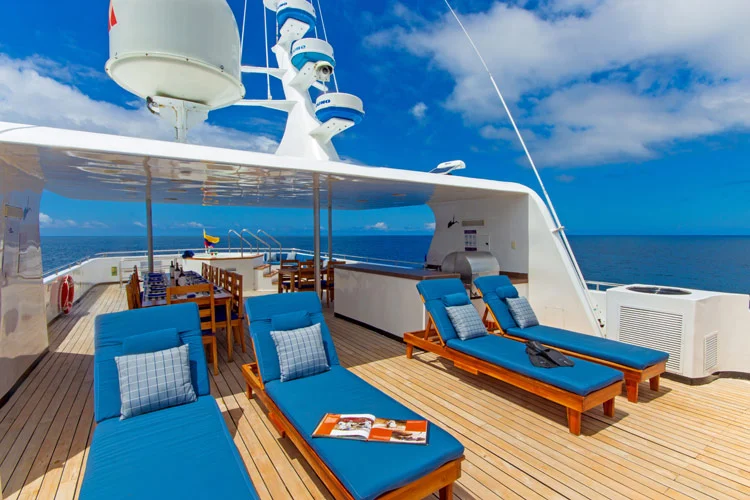
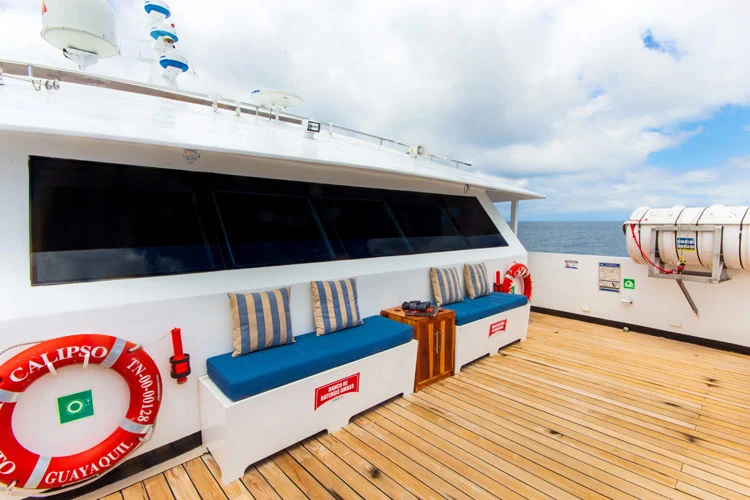
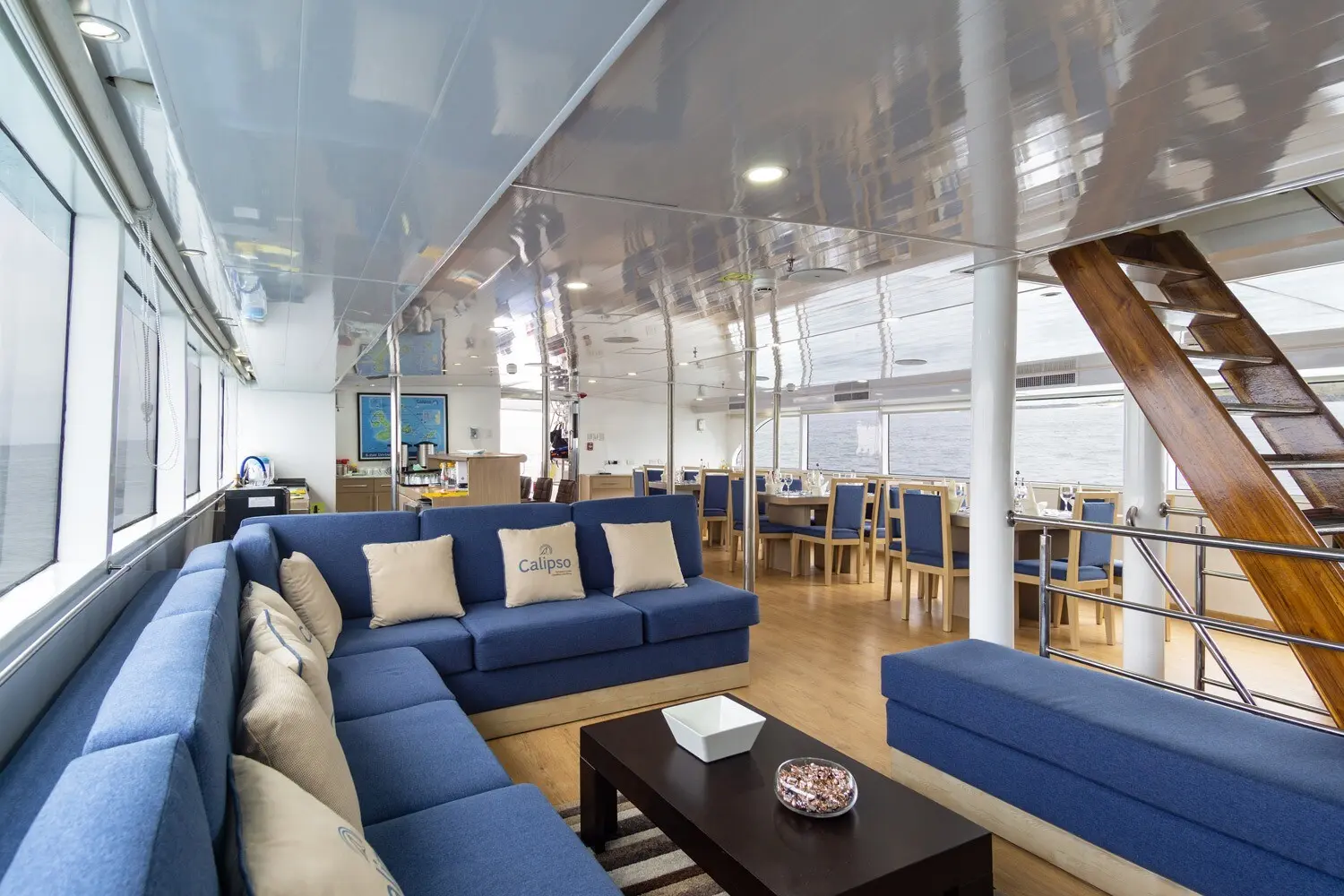
Calipso is one of the bigger transformation stories in the Galapagos fleet. The hull dates to 1991, but the 2018–19 rebuild left a boat that reads as current rather than maintained: clean-lined cabins, bright interiors, and the deck space that decides how a diving week actually feels. Thirty-five metres of length and eight of beam give her the stability you want on the long run north.
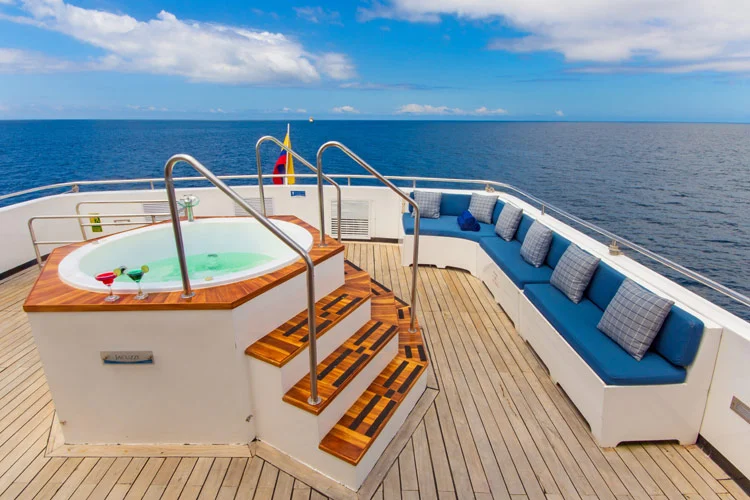
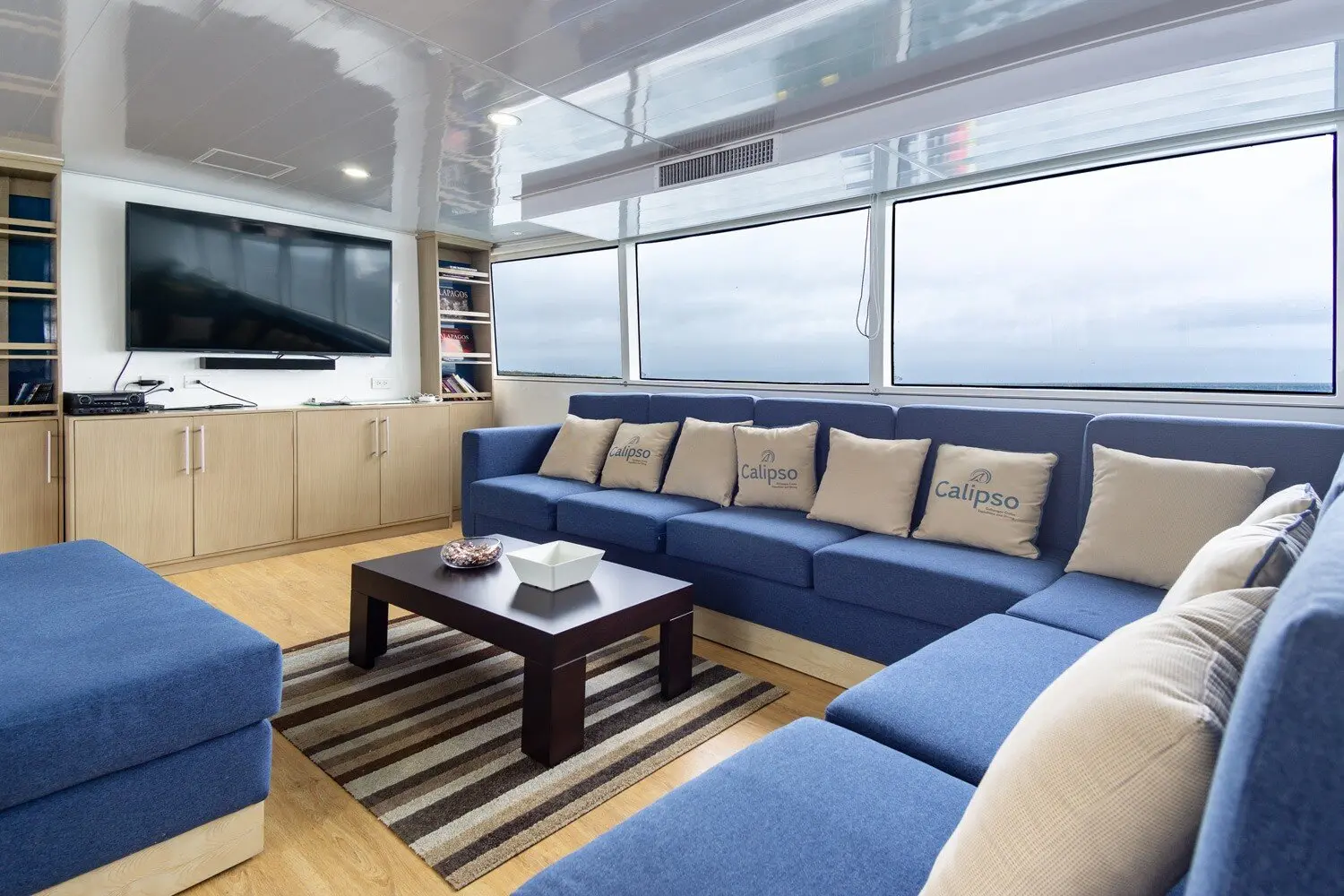
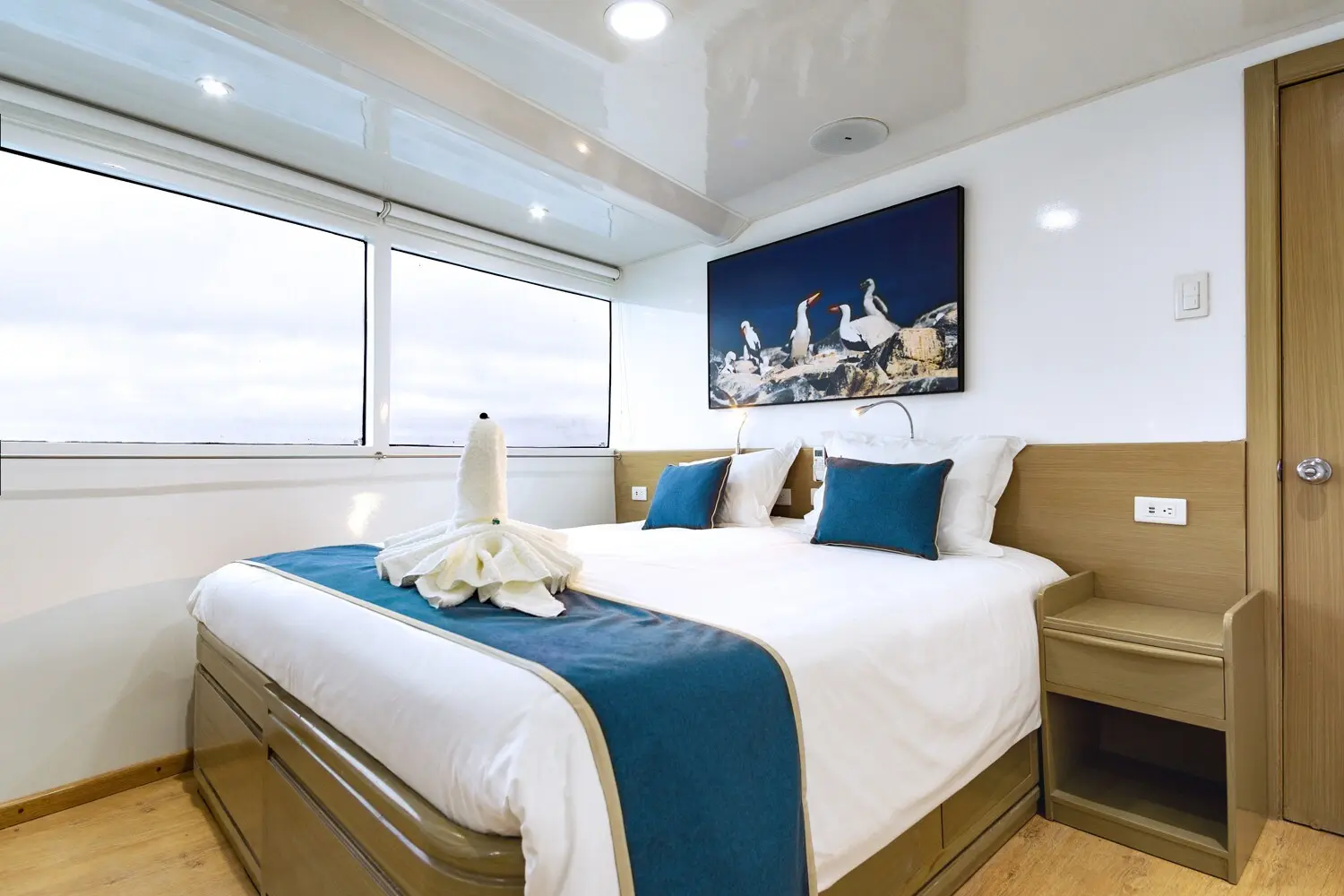
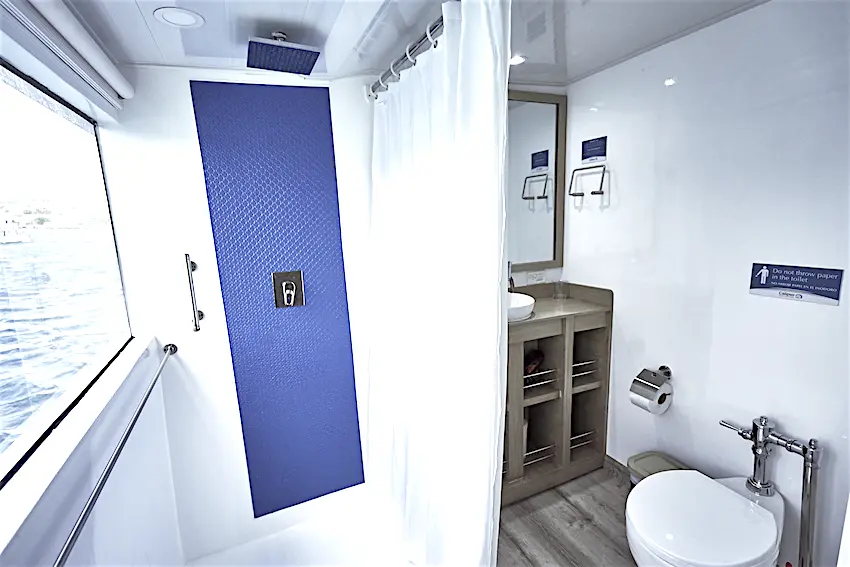
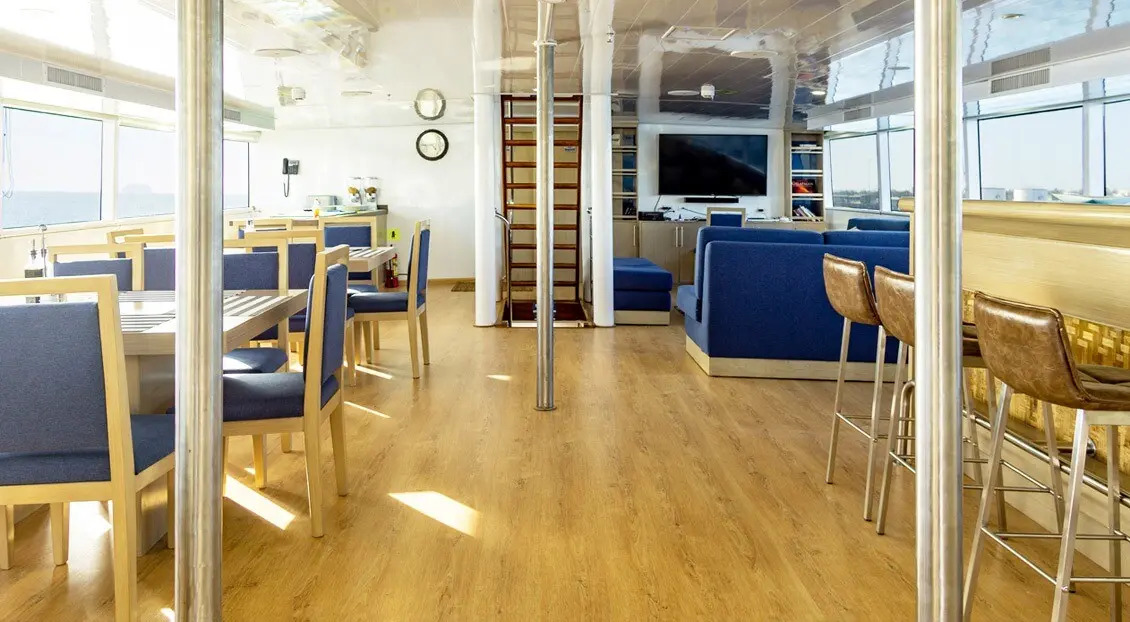
Sixteen guests in eight cabins — six on the upper deck, two on the main — all with windows and ocean views, private bathroom, hot water and air conditioning. Eleven crew and two bilingual instructors run the operation, which is a lot of hands for that many divers. Between dives the sun deck, lounge, bar and Jacuzzi are where the day slows down.
At a glance
The week, by depth
Darwin
The reason the boat sails this far north. Hammerheads school along the wall, and whale sharks pass through in season, roughly June to November. You hook in, stay low, and let the traffic come to you.
Wolf
Cleaning stations, walls and constant movement: hammerheads, Galapagos sharks, silkies, whitetips resting on the reef, and schools of jacks dense enough to dim the light.
Central sites
The dives on the way north and back: turtles, rays, sea lions and reef life in calmer water. They work as check dives at the start of the week and as a gentler close after Darwin.
Nothing in the water is guaranteed. These animals show up often enough to plan a week around, not often enough to promise. Departures do not run on a fixed calendar — tell us your dates and we check what is sailing.
Eight days, seven nights
Arrival and Lobos Island
Fly into San Cristobal, transfer to the boat, and start easy in the afternoon at Lobos Island — sea lions, shallow water, and a first look at your weighting.
Carrion Point and Baltra North East
Two calm sites in the central islands before the long run north. This is the day to sort out anything that did not sit right yesterday.
La Ventana, La Banana, Shark Point, El Derrumbe
A full day working Wolf from four different angles: cleaning stations, walls and current lines, with hammerheads, Galapagos sharks and silkies moving through.
Darwin’s Arch and El Arenal
The day the whole trip is built around. You hook in below the Arch, stay low, and let the schooling hammerheads come to you. Whale sharks pass through in season, roughly June to November.
A second morning at Darwin
Two more dives at the Arch and El Arenal, then back south to Wolf for La Banana and Shark Point in the afternoon.
Isabela or Fernandina
Cold western water, and the crew picks the sites on the day: Coka Port or Cape Douglas in the morning, Cape Marshall or Vicente Roca Point in the afternoon. Marine iguanas, mola mola, mantas and turtles.
Cousins Rock and the highlands
Last dives of the week at Cousins Rock, then ashore on Santa Cruz: the El Chato tortoise reserve and the Fausto Llerena breeding centre.
Puerto Baquerizo Moreno
A last morning in town on San Cristobal, then the transfer to the airport and the flight back to the mainland.
Departures run Thursday to Thursday. Sites and dive counts shift with conditions — the crew decides on the day.
What she carries
- Large oxygen bottles, plus one oxygen kit per panga
- AED and first aid kits on board
- Nautilus Lifelines, dive alerts, SMBs and noisemakers
- Two life boats and life jackets for everyone on board
- Furuno radar and sonar, VHF radio, GPS antenna
- EPIRB emergency beacon, searchlight and horn
- Sprinklers in all cabins and interior spaces
- Fire alarm, extinguishers, hoses and a 150 kg CO2 bank
- Smoke and temperature detectors throughout
- Bauer Verticus compressor, 5,000 PSI
What comes with the week
- All meals, plus water, coffee, tea and fresh juice
- Nitrox free of charge
- Snorkel gear at no extra cost
- Wetsuits provided
- Kayaks on board
- English-speaking guides and two dive instructors
- Air conditioning and a private bathroom in every cabin
- Sun deck with Jacuzzi and al fresco dining
- Wi-Fi on board
- Solo travellers can share a cabin
- Children twelve and under pay 20% less
- Every booking supports the Ventura conservation project
Where you sleep
Eight double cabins, six on the upper deck and two on the main, all with windows and ocean views. Private bathroom, hot water and air conditioning throughout. The standard category converts between double and twin, for two guests.
Meals on board
Meals follow the dive schedule rather than a menu card: generous, fresh, and timed around tank fills and surface intervals. International cooking with Ecuadorian turns — fish and seafood, poultry, rice and pasta, fruit and vegetables. Tell us about dietary needs when you book and the galley plans around them.
Is this your boat?
Book it if
- Darwin and Wolf are the reason for the trip
- You want a dive boat with a serious safety inventory
- You like the ratio: eleven crew and two instructors for sixteen guests
- You want deck space and a Jacuzzi at the end of a four-dive day
Choose another cruise if
- You are new to diving, or diving after a long break
- Part of your group does not dive
- You want landings and snorkeling at the centre of the week
- You need a fixed departure date and cannot be flexible
Worth comparing: the Tiburon Explorer, built for diving in 2020. Prefer landings and snorkeling? We arrange naturalist cruises across the archipelago.
Tell us your dates
Departures do not run on a fixed calendar. Send the week you have in mind and we come back with what is sailing on the Calipso, the cabins still open, and what it costs.